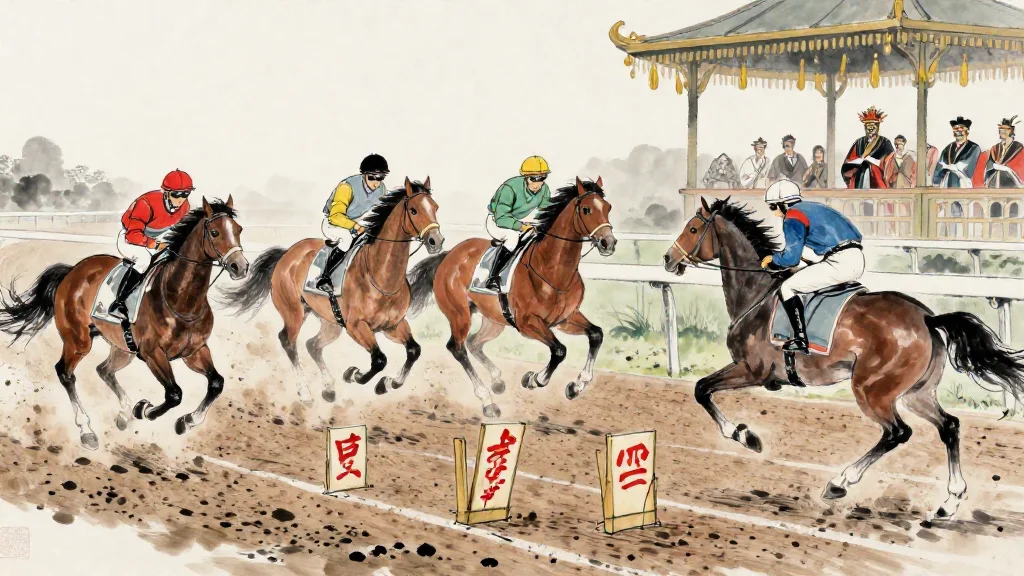
齊策一 (Stratagems of Qi I) — Chinese ink painting

Chapter 8 of 33 · Qi state

齊策一

Stratagems of Qi I

View:

楚威王戰勝於徐州

King Wei of Chu Wins at Xuzhou

楚威王戰勝於徐州,欲逐嬰子於齊。嬰子恐,張醜謂楚王曰:「王戰勝於徐州也,盼子不用也。盼子有功於國,百姓為之用。嬰子不善,而用申縛。申縛者,大臣與百姓弗為用,故王勝之也。今嬰子逐,盼子必用,復整其士卒以與王遇,必不便於王也。」楚王因弗逐。

King Wei of Chu won a victory at Xuzhou and wanted to expel Ying Zi from Qi. Ying Zi was alarmed. Zhang Chou said to the King of Chu: "The reason Your Majesty won at Xuzhou was that Pan Zi was not employed. Pan Zi has merit in the state and the people serve him willingly. Ying Zi was incompetent — he used Shen Fu instead. Shen Fu is a man whom the great ministers and common people refuse to serve, and that is why Your Majesty was able to defeat him. Now if Ying Zi is expelled, Pan Zi will certainly be employed. He will reorganize the troops and engage Your Majesty again — and that will not be to your advantage."

The King of Chu therefore did not expel him.

Notes

1person楚威王Chǔ Wēi Wáng

King Wei of Chu (楚威王, r. 339–329 BC) was an aggressive ruler who expanded Chu's power significantly, including victories over Qi.

2place

Xuzhou (徐州) here refers to an ancient city near modern Tengzhou, Shandong — not the modern city of Xuzhou in Jiangsu. The battle took place c. 333 BC.

3person嬰子 / 盼子Yīng Zi / Pàn Zi

Ying Zi (嬰子) is Tian Ying (田嬰), later known as Jingguo Jun (靖郭君), father of Lord Mengchang. Pan Zi (盼子) was Tian Pan (田盼), a capable Qi general.

4context

Zhang Chou's argument is a fine piece of reverse psychology: he persuades Chu not to remove Qi's worst minister by pointing out that doing so would force Qi to promote its best one. It is in Chu's interest to leave Qi incompetently governed. The logic is impeccable and slightly cynical.

齊將封田嬰於薛

Qi Plans to Enfeoff Tian Ying at Xue

齊將封田嬰於薛。楚王聞之,大怒,將伐齊。齊王有輟志。公孫閈曰:「封之成與不,非在齊也,又將在楚。閈說楚王,令其欲封公也又甚於齊。」嬰子曰:「願委之於子。」

公孫閈為謂楚王曰:「魯、宋事楚而齊不事者,齊大而魯、宋小。王獨利魯、宋之小,不惡齊大,何也?夫齊削地而封田嬰,是其所以弱也。願勿止。」楚王曰:「善。」因不止。

Qi was about to enfeoff Tian Ying at Xue. The King of Chu heard of it and was furious, intending to attack Qi. The King of Qi was on the verge of abandoning the plan.

Gongsun Han said: "Whether the enfeoffment succeeds depends not on Qi but on Chu. Let me persuade the King of Chu to want the enfeoffment even more than Qi does."

Tian Ying said: "I entrust it to you."

Gongsun Han addressed the King of Chu: "The reason Lu and Song serve Chu while Qi does not is that Qi is large and Lu and Song are small. Your Majesty profits from Lu and Song being small — so why would you object to Qi being large? When Qi carves off territory to enfeoff Tian Ying, it weakens itself. I recommend you do not interfere."

The King of Chu said: "Excellent." And he did not interfere.

Notes

1place

Xue (薛) was located in modern Tengzhou, Shandong. It became the power base of the Tian Ying / Tian Wen (Mengchang) family.

2person公孫閈Gōngsūn Hàn

Gongsun Han (公孫閈) was a retainer of Tian Ying. He appears in multiple Qi episodes as a cunning fixer.

3context

The argument is a masterclass in reframing: what looks like Qi rewarding a powerful minister is repackaged as Qi weakening itself by fragmenting its territory. Chu is persuaded to permit exactly what it wanted to prevent, because the same action looks like strength from one angle and weakness from another.

靖郭君將城薛

Lord Jingguo Plans to Fortify Xue

靖郭君將城薛,客多以諫。靖郭君謂謁者,無為客通。齊人有請者曰:「臣請三言而已矣!益一言,臣請烹。」靖郭君因見之。客趨而進曰:「海大魚。」因反走。君曰:「客有於此。」客曰:「鄙臣不敢以死為戲。」君曰:「亡,更言之。」對曰:「君不聞大魚乎?網不能止,鉤不能牽,盪而失水,則螻蟻得意焉。今夫齊,亦君之水也,君長有齊陰,奚以薛為?夫齊,雖隆薛之城到於天,猶之無益也。」君曰:「善。」乃輟城薛。

Lord Jingguo planned to fortify Xue. Many retainers remonstrated against it. Lord Jingguo told his doorkeeper to refuse them all entry.

A man from Qi requested an audience, saying: "I ask for only three words. If I utter even one more, I consent to be boiled alive."

Lord Jingguo agreed to see him. The visitor hurried forward and said: "Sea. Big. Fish."

Then he turned to leave.

The lord said: "Stay — go on."

The visitor said: "Your humble servant would not dare jest with his life."

The lord said: "Never mind that — speak."

The visitor replied: "Has my lord not heard of the great fish of the sea? Nets cannot hold it, hooks cannot pull it — but if it is washed ashore and loses the water, then even mole-crickets and ants can have their way with it. Now Qi is my lord's water. As long as you have Qi's protection, what do you need Xue for? Even if you raised Xue's walls to the sky, it would be of no use."

The lord said: "Excellent." He abandoned the fortification of Xue.

Notes

1person靖郭君 (田嬰)Jìngguō Jūn (Tián Yīng)

Lord Jingguo (靖郭君) is Tian Ying (田嬰, d. 279 BC), a powerful Qi minister and father of Lord Mengchang (Tian Wen). He was enfeoffed at Xue.

2context

The 'three words' gambit is a brilliant piece of persuasion theater. By promising brevity on pain of death, the visitor forces himself to be heard, and by saying only 'sea big fish' he creates a mystery that compels the lord to ask for more. The metaphor itself is sharp: a vassal who fortifies his own fief is signaling that he does not trust the king's protection, which is precisely the kind of behavior that gets vassals destroyed. The walls would protect Xue from everyone except the one power that could actually threaten it — Qi itself.

靖郭君謂齊王

Lord Jingguo Addresses the King of Qi

靖郭君謂齊王曰:「五官之計,不可不日聽也而數覽。」王曰:「說五而厭之。」今與靖郭君。

Lord Jingguo said to the King of Qi: "The accounts of the Five Offices must be reviewed daily and examined frequently."

The king said: "After hearing five of them, I grow weary." He handed the matter over to Lord Jingguo.

Notes

1context

This is one of the shortest episodes in the Zhanguoce, and it may be the most revealing. Lord Jingguo suggests the king should personally oversee the bureaucracy; the king finds it boring and delegates all of it to Lord Jingguo. Whether Jingguo's advice was sincere or a deliberate ploy to accumulate power, the result is the same: the minister gains control of the state's administrative apparatus because the king cannot be bothered.

2translation

五官 ('Five Offices') refers to the five branches of the Qi bureaucracy — the exact division is unclear, but they covered military, agricultural, judicial, ritual, and fiscal functions.

靖郭君善齊貌辨

Lord Jingguo Favors Qi Maobian

靖郭君善齊貌辨。齊貌辨之為人也多疵,門人弗說。士尉以證靖郭君,靖郭君不聽,士尉辭而去。孟嘗君又竊以諫,靖郭君大怒曰:「剗而類,破吾家。苟可慊齊貌辨者,吾無辭為之。」於是舍之上舍,令長子御,旦暮進食。

數年,威王薨,宣王立。靖郭君之交,大不善於宣王,辭而之薛,與齊貌辨俱留。無幾何,齊貌辨辭而行,請見宣王。靖郭君曰:「王之不說嬰甚,公往必得死焉。」齊貌辨曰:「固不求生也,請必行。」靖郭君不能止。

齊貌辨行至齊,宣王聞之,藏怒以待之。齊貌辨見宣王,王曰:「子,靖郭君之所聽愛夫。」齊貌辨曰:「愛則有之,聽則無有。王之方為太子之時,辨謂靖郭君曰:『太子相不仁,過頤豕視,若是者信反。不若廢太子,更立衛姬嬰兒郊師。』靖郭君泣而曰:『不可,吾不忍也。』若聽辨而為之,必無今日之患也。此為一。至於薛,昭陽請以數倍之地易薛,辨又曰:『必聽之。』靖郭君曰:『受薛於先王,雖惡於後王,吾獨謂先王何乎!且先王之廟在薛,吾豈可以先王之廟與楚乎!』又不肯聽辨。此為二。」宣王大息,動於顏色,曰:「靖郭君之於寡人,一至此乎!寡人少,殊不知此。客肯為寡人來靖郭君乎?」齊貌辨對曰:「敬諾。」

靖郭君衣威王之衣,冠舞其劍,宣王自迎靖郭君於郊,望之而泣。靖郭君至,因請相之。靖郭君辭,不得已而受。七日,謝病強辭。靖郭君辭不得,三日而聽。

當是時,靖郭君可謂能自知人矣!能自知人,故人非之不為沮。此齊貌辨之所以外生樂患趣難者也。

Lord Jingguo favored Qi Maobian. Qi Maobian was a man of many flaws, and the retainers disliked him. The Officer of Guard remonstrated with Lord Jingguo, but he would not listen. The Officer of Guard resigned and left. Lord Mengchang also privately urged his father to reconsider. Lord Jingguo erupted in fury: "I will slaughter your whole lot and ruin my own house before I give up Qi Maobian. Whatever he wants, I will do it without question."

He installed Qi Maobian in the finest quarters, had his eldest son drive his chariot, and served him meals morning and evening.

Several years later, King Wei died and King Xuan succeeded. Lord Jingguo's relations with King Xuan were very poor. He resigned his position and withdrew to Xue, taking Qi Maobian with him. Before long, Qi Maobian took his leave and asked to go see King Xuan.

Lord Jingguo said: "The king despises me. If you go, you will certainly be killed."

Qi Maobian said: "I never sought to live. Allow me to go."

Lord Jingguo could not stop him.

Qi Maobian traveled to the Qi capital. King Xuan heard he was coming and concealed his anger to await him. When Qi Maobian appeared before King Xuan, the king said: "You are the man Lord Jingguo listens to and dotes on."

Qi Maobian replied: "He dotes on me, yes. Listens to me, no. When Your Majesty was still crown prince, I told Lord Jingguo: 'The crown prince has the look of cruelty — jutting jaw and sidelong glare like a pig. Such a man will surely turn against you. Better to depose the crown prince and install the Lady of Wei's infant son, Jiaoshi, instead.' Lord Jingguo wept and said: 'I cannot. I have not the heart for it.' Had he listened to me, there would be no trouble today. That is the first instance.

"After he withdrew to Xue, Zhao Yang offered to trade several times the territory for Xue. I again advised: 'You must accept.' Lord Jingguo said: 'I received Xue from the late king. Even though the present king treats me badly, what would I say to the late king? Moreover, the late king's temple stands at Xue — how could I hand the late king's temple to Chu?' He again refused to listen. That is the second instance."

King Xuan heaved a great sigh and his expression changed. He said: "Lord Jingguo treated me with such devotion? I was young and did not know this at all. Would the guest bring Lord Jingguo back to me?"

Qi Maobian replied: "Respectfully, yes."

Lord Jingguo put on King Wei's robes, bore his sword, and set out. King Xuan went in person to welcome Lord Jingguo at the outskirts, and wept when he saw him approaching. When Lord Jingguo arrived, the king asked him to serve as chancellor. Lord Jingguo declined, but could not refuse. After seven days, he pleaded illness and firmly declined. His refusal was not accepted for three days, and then the king relented.

At that time, Lord Jingguo could truly be called a man who knew people. Because he knew people, he was not shaken when others criticized his judgment. This is why Qi Maobian was willing to risk his life, embrace hardship, and rush toward danger.
Notes

1person齊貌辨Qí Màobiàn

Qi Maobian (齊貌辨) was a retainer of Lord Jingguo, apparently a man of poor personal reputation but fierce loyalty. His name might mean 'Qi the Face-Reader' — which, given that his role in this episode involves reading the crown prince's physiognomy, may not be a coincidence.

2person齊威王 / 齊宣王Qí Wēi Wáng / Qí Xuān Wáng

King Wei of Qi (齊威王, r. 356–320 BC) and King Xuan of Qi (齊宣王, r. 319–301 BC). Lord Jingguo served under Wei and fell from favor under Xuan.

3person昭陽Zhāo Yáng

Zhao Yang (昭陽) was a Chu general and minister. His offer to trade land for Xue was presumably a Chu ploy to gain strategic territory in Qi's sphere.

4context

The episode's moral structure is built on dramatic irony. Everyone — the retainers, the officer of guard, even Lord Mengchang — thinks Lord Jingguo is a fool for keeping Qi Maobian. But Qi Maobian turns out to be the one person willing to walk into certain death to save his patron. The two pieces of advice Jingguo rejected (depose the crown prince; sell Xue) are presented as proof of loyalty to the king — he chose the king's interests over his own safety, twice. Whether Qi Maobian is telling the truth or crafting a retrospective narrative to save Jingguo is, characteristically, left ambiguous.

邯鄲之難

The Crisis at Handan

邯鄲之難,趙求救於齊。田侯召大臣而謀曰:「救趙孰與勿救?」鄒子曰:「不如勿救。」段乾綸曰:「弗救,則我不利。」田侯曰:「何哉?」「夫魏氏兼邯鄲,其於齊何利哉?」田侯曰:「善。」乃起兵,曰:「軍於邯鄲之郊。」段乾綸曰:「臣之求利且不利者,非此也。夫救邯鄲,軍於其郊,是趙不拔而魏全也。故不如南攻襄陵以弊魏,邯鄲拔而承魏之弊,是趙破而魏弱也。」田侯曰:「善。」乃起兵南攻襄陵。七月,邯鄲拔。齊因承魏之弊,大破之桂陵。

During the crisis at Handan, Zhao sought aid from Qi. Marquis Tian summoned his great ministers and asked: "Is it better to rescue Zhao or not?"

Zou Zi said: "Better not to rescue them."

Duan Gan Lun said: "If we do not rescue them, it will not be to our advantage."

Marquis Tian asked: "Why?"

"If Wei annexes Handan, how does that benefit Qi?"

Marquis Tian said: "Good point." He raised an army and said: "We will station our troops at the outskirts of Handan."

Duan Gan Lun said: "The advantage I seek is not that. If we rescue Handan by stationing our army outside it, then Zhao is not taken but Wei emerges unscathed. Better to attack Xianglin in the south to exhaust Wei. Let Handan fall, then strike Wei while it is spent — this way Zhao is broken and Wei is weakened."

Marquis Tian said: "Excellent." He raised an army and attacked Xianglin in the south. After seven months, Handan fell. Qi then struck at Wei's exhausted forces and inflicted a crushing defeat at Guiling.

Notes

1context

This is the famous battle of Guiling (桂陵, 354 BC), often cited by the phrase 'besiege Wei to rescue Zhao' (圍魏救趙). But Duan Gan Lun's actual strategy is more ruthless than the popular version suggests: he deliberately lets Handan fall so that both Zhao and Wei are weakened. Qi rescues no one — it just profits from everyone else's losses. This is realpolitik at its most unsentimental.

2person田侯Tián Hóu

Marquis Tian (田侯) is Tian Qi (田齊), likely Duke Wei of Qi (齊威王) or his predecessor. The Tian family had usurped the ruling Jiang family of Qi.

3person段乾綸Duàn Gān Lún

Duan Gan Lun (段乾綸) was a Qi strategist. His cold-blooded analysis — let the ally fall, then exploit the victor's exhaustion — became a model for indirect warfare in Chinese strategic thought.

4place

Guiling (桂陵) was near modern Changyuan, Henan. Xianglin (襄陵) was near modern Suiping, Henan.

南梁之難

The Crisis at Nanliang

南梁之難,韓氏請救於齊。田侯召大臣而謀曰:「早救之,孰與晚救之便?」張丐對曰:「晚救之,韓且折而入於魏,不如早救之。」田臣思曰:「不可。夫韓、魏之兵未弊,而我救之,我代韓而受魏之兵,顧反聽命於韓也。且夫魏有破韓之志,韓見且亡,必東訴於齊。我因陰結韓之親,而晚承魏之弊,則國可重,利可得,名可尊矣。」田侯曰:「善。」乃陰告韓使者而遣之。韓自以專有齊國,五戰五不勝,東訴於齊,齊因起兵擊魏,大破之馬陵。魏破韓弱,韓、魏之君因田嬰北面而朝田侯。

During the crisis at Nanliang, Han requested aid from Qi. Marquis Tian summoned his great ministers and asked: "Is it better to rescue them early or late?"

Zhang Gai replied: "If we rescue them late, Han will be broken and absorbed by Wei. Better to rescue them early."

Tian Chensi said: "That will not do. If Han and Wei's armies are not yet exhausted and we intervene, we take Wei's blows in Han's place and end up taking orders from Han. Moreover, Wei is determined to destroy Han. When Han sees itself on the verge of annihilation, it will certainly appeal eastward to Qi. We should secretly bind Han to us and wait to strike Wei when it is spent. Then our state's weight will increase, profit will come to us, and our reputation will be elevated."

Marquis Tian said: "Excellent." He secretly reassured the Han envoy and sent him home.

Han, believing it had Qi's exclusive backing, fought five battles and lost all five. It appealed eastward to Qi. Qi then raised its army and struck Wei, inflicting a devastating defeat at Maling.

With Wei broken and Han weakened, the lords of Han and Wei came through Tian Ying to pay court, facing north, to Marquis Tian.

Notes

1context

This is the battle of Maling (馬陵, 341 BC), the sequel to Guiling — and Qi uses exactly the same playbook. Tian Chensi's strategy is even colder than Duan Gan Lun's: he secretly encourages Han to fight on alone, knowing it will lose, specifically so that Han will become desperate enough to accept any terms Qi offers. Han fights five losing battles believing Qi will rescue it, and Qi waits until the optimal moment to strike Wei's exhausted army. Both Han and Wei end up as Qi's clients.

2person田臣思Tián Chénsī

Tian Chensi (田臣思) is likely the same figure as Sun Bin's commander Tian Ji (田忌). His strategic patience at Maling mirrors the indirect approach at Guiling.

3place

Maling (馬陵) was in modern Daming County or Fan County, Henan. It was the site of Sun Bin's famous ambush of Pang Juan. Nanliang (南梁) was near modern Linru, Henan.

成侯鄒忌為齊相

Lord Cheng Zou Ji Serves as Chancellor of Qi

成侯鄒忌為齊相,田忌為將,不相說。公孫閈謂鄒忌曰:「公何不為王謀伐魏?勝,則是君之謀也,君可以有功;戰不勝,田忌不進,戰而不死,曲撓而誅。」鄒忌以為然,乃說王而使田忌伐魏。田忌三戰三勝,鄒忌以告公孫閈,公孫閈乃使人操十金而往卜於市,曰:「我田忌之人也,吾三戰而三勝,聲威天下,欲為大事,亦吉否?」卜者出,因令人捕為人卜者,亦驗其辭於王前。田忌遂走。

Lord Cheng Zou Ji served as chancellor of Qi, and Tian Ji served as general. The two did not get along.

Gongsun Han said to Zou Ji: "Why not advise the king to send Tian Ji to attack Wei? If he wins, the credit goes to your strategy and you gain merit. If he loses, Tian Ji will either fail to advance, or fight and fail to die — either way he can be charged with misconduct and executed."

Zou Ji agreed and persuaded the king to send Tian Ji against Wei. Tian Ji won three battles in succession.

Zou Ji reported this to Gongsun Han. Gongsun Han then sent someone with ten pieces of gold to consult a fortune-teller in the marketplace, saying: "I am one of Tian Ji's men. We have won three battles and our fame shakes All-Under-Heaven. We wish to undertake a great enterprise — will this be auspicious?"

After the fortune-teller came out, Gongsun Han had people arrest the man who had consulted the fortune-teller and verified his words before the king. Tian Ji was forced to flee.

Notes

1person鄒忌 / 田忌Zōu Jì / Tián Jì

Zou Ji (鄒忌), Lord Cheng (成侯), was a famous Qi minister, known from the mirror anecdote (section 12 below). Tian Ji (田忌) was the general who commanded at Guiling and Maling. Their rivalry is one of the recurring subplots in the Qi chapters.

2context

This is a frame-up of remarkable elegance. Gongsun Han's original scheme was heads-I-win-tails-you-lose: if Tian Ji loses, he is punished for failure; if he wins, fabricate evidence that he plans a coup. The fortune-telling plant — paying someone to publicly inquire about the auspiciousness of 'a great enterprise' in Tian Ji's name — creates enough circumstantial evidence to destroy a victorious general. The irony: Tian Ji's three victories, which should have secured his position, become the very basis for the accusation.

田忌為齊將

Tian Ji as General of Qi

田忌為齊將,系梁太子申,禽龐涓。孫子謂田忌曰:「將軍可以為大事乎?」田忌曰:「奈何?」孫子曰:「將軍無解兵而入齊。使彼罷弊於先弱守於主。主者,循軼之途也,轄擊摩車而相過。使彼罷弊先弱守於主,必一而當十,十而當百,百而當千。然後背太山,左濟,右天唐,軍重踵高宛,使輕車銳騎沖雍門。若是,則齊君可正,而成侯可走。不然,則將軍不得入於齊矣。」田忌不聽,果不入齊。

Tian Ji, as general of Qi, captured Crown Prince Shen of Wei and took Pang Juan prisoner. Sun Zi said to Tian Ji: "Can the general undertake a great enterprise?"

Tian Ji said: "How?"

Sun Zi said: "Do not disband your army, but march directly into Qi. Station exhausted and weak troops to hold the main roads — the narrow passages where axles scrape and chariots can barely pass. With weary troops holding these routes, one man can hold off ten, ten can hold off a hundred, a hundred can hold off a thousand. Then place your main force with Mount Tai at your back, the Ji River on your left, Tiantang on your right, your heavy baggage following from Gaowan, and send your light chariots and elite cavalry to charge through the Yong Gate. In this way the lord of Qi can be set right and Lord Cheng can be driven out. Otherwise, the general will not be able to return to Qi."

Tian Ji did not heed this advice, and indeed he was unable to return to Qi.

Notes

1person孫臏Sūn Bìn

Sun Zi (孫子) here is Sun Bin (孫臏, fl. 4th century BC), the military strategist and descendant of Sunzi, author of the Art of War. He served as Tian Ji's military advisor and masterminded the victories at Guiling and Maling.

2person龐涓Páng Juān

Pang Juan (龐涓, d. 341 BC) was a Wei general and Sun Bin's rival. According to tradition, he had earlier had Sun Bin mutilated (his kneecaps removed). His capture or death at Maling was Sun Bin's revenge.

3context

Sun Bin is advising Tian Ji to stage a coup: march directly into the Qi capital with his victorious army, seize control, and depose Zou Ji. The military plan is detailed and sound — Sun Bin has clearly war-gamed the topography of the approach to Linzi. Tian Ji's refusal may have been principled (he did not want to be a usurper) or timid (he feared failure). Either way, Sun Bin's prediction was correct: without seizing the initiative, Tian Ji was outmaneuvered by Zou Ji's court intrigues and forced into exile.

4place

The Yong Gate (雍門) was the western gate of Linzi (臨淄), the Qi capital, near modern Zibo, Shandong. Mount Tai (太山/泰山) is southwest of Linzi.

田忌亡齊而之楚

Tian Ji Flees Qi for Chu

田忌亡齊而之楚,鄒忌代之相。齊恐田忌欲以楚權復於齊,杜赫曰:「臣請為留楚。」

謂楚王曰:「鄒忌所以不善楚者,恐田忌之以楚權復於齊也。王不如封田忌於江南,以示田忌之不返齊也,鄒忌以齊厚事楚。田忌亡人也,而得封,必德王。若復於齊,必以齊事楚。此用二忌之道也。」楚果封之於江南。

Tian Ji fled Qi and went to Chu. Zou Ji took his position as chancellor. Qi feared that Tian Ji would use Chu's power to force his way back into Qi. Du He said: "Allow me to arrange for him to stay in Chu."

He addressed the King of Chu: "The reason Zou Ji is hostile to Chu is that he fears Tian Ji will use Chu's power to return to Qi. If Your Majesty enfeoffs Tian Ji south of the Yangtze, it will demonstrate that Tian Ji will not return to Qi — and Zou Ji will use Qi to serve Chu generously. Tian Ji is a fugitive; if he receives a fief, he will be grateful to Your Majesty. If he does eventually return to Qi, he will use Qi to serve Chu. This is the way to use both Ji's to your advantage."

Chu did indeed enfeoff him south of the Yangtze.

Notes

1person杜赫Dù Hè

Du He (杜赫) was a diplomat who appears in several Zhanguoce episodes, typically brokering deals between states.

2context

Du He's scheme is an elegant two-way play: by parking Tian Ji permanently in Chu, both Zou Ji (who fears Tian Ji's return) and Tian Ji (who gains a fief from exile) become indebted to Chu. The phrase 'using both Ji's' is a pun — Zou Ji and Tian Ji share the same surname character, and Chu can extract value from both of them simultaneously.

鄒忌事宣王

Zou Ji Serves King Xuan

鄒忌事宣王,仕人眾,宣王不悅。晏首貴而仕人寡,王悅之。鄒忌謂宣王曰:「忌聞以為有一子之孝,不如有五子之孝。今首之所進仕者,以幾何人?」宣王因以晏首壅塞之。

Zou Ji served King Xuan and recommended many men for office. King Xuan was displeased. Yan Shou, though of high rank, recommended few men, and the king was pleased with this.

Zou Ji said to King Xuan: "I have heard that the filial devotion of one son is not as good as the filial devotion of five sons. How many men has Yan Shou actually recommended?"

King Xuan consequently blocked and marginalized Yan Shou.

Notes

1person晏首Yàn Shǒu

Yan Shou (晏首) was a Qi nobleman of the Yan clan. His 'virtue' of recommending few people is reframed by Zou Ji as dereliction of duty.

2context

Zou Ji's argument is a neat inversion: the king instinctively trusts the minister who recommends fewer people (less patronage = less faction-building), but Zou Ji reframes this as a minister who fails to identify talent for the state. Of course, Zou Ji's own prolific recommendations may also have been faction-building — but by shifting the frame to 'service to the state,' he makes parsimony look like negligence.

鄒忌修八尺有餘

Zou Ji Was Over Eight Chi Tall

鄒忌修八尺有餘,身體昳麗。朝服衣冠窺鏡,謂其妻曰:「我孰與城北徐公美?」其妻曰:「君美甚,徐公何能及公也!」城北徐公,齊國之美麗者也。忌不自信,而復問其妾曰:「吾孰與徐公美?」妾曰:「徐公何能及君也!」旦日,客從外來,與坐談,問之客曰:「吾、徐公孰美?」客曰:「徐公不若君之美也!」

明日,徐公來。孰視之,自以為不如;窺鏡而自視,又弗如遠甚。暮,寢而思之曰:「吾妻之美我者,私我也;妾之美我者,畏我也;客之美我者,欲有求於我也。」

於是入朝見威王曰:「臣誠知不如徐公美,臣之妻私臣,臣之妾畏臣,臣之客欲有求於臣,皆以美於徐公。今齊地方千里,百二十城,宮婦左右,莫不私王;朝廷之臣,莫不畏王;四境之內,莫不有求於王。由此觀之,王之蔽甚矣!」王曰:「善。」乃下令:「群臣吏民,能面刺寡人之過者,受上賞;上書諫寡人者,受中賞;能謗議於市朝,聞寡人之耳者,受下賞。」

令初下,群臣進諫,門庭若市。數月之後,時時而間進。期年之後,雖欲言,無可進者。燕、趙、韓、魏聞之,皆朝於齊。此所謂戰勝於朝廷。

Zou Ji was over eight chi tall, with a handsome figure and fine features. One morning he put on his court robes and cap, looked in the mirror, and asked his wife: "Who is more handsome — I, or Master Xu north of the city?"

His wife said: "You are far more handsome. How could Master Xu compare?"

Master Xu north of the city was the most beautiful man in the state of Qi. Zou Ji was not convinced and asked his concubine: "Who is more handsome — I, or Master Xu?"

His concubine said: "How could Master Xu compare to you?"

The next day, a guest came from outside. They sat and talked, and Zou Ji asked: "Who is more handsome — I, or Master Xu?"

The guest said: "Master Xu is not as handsome as you."

The following day, Master Xu came to visit. Zou Ji studied him carefully and concluded he himself was not as handsome. He looked in the mirror again — the gap was not even close.

That evening, lying in bed, he reflected: "My wife called me handsome because she is partial to me. My concubine called me handsome because she fears me. My guest called me handsome because he wants something from me."

He went to court and said to King Wei: "I know perfectly well that I am not as handsome as Master Xu. Yet my wife is partial to me, my concubine fears me, and my guest wants something from me — so all three told me I was more handsome. Now Qi's territory extends a thousand li and includes a hundred and twenty cities. The palace women and attendants are all partial to Your Majesty. The ministers at court all fear Your Majesty. Everyone within the four borders wants something from Your Majesty. Seen in this light, Your Majesty is profoundly deceived."

The king said: "You are right." He issued a decree: "Any minister, official, or commoner who can criticize my faults to my face shall receive the highest reward. Anyone who submits written remonstrance shall receive the middle reward. Anyone who discusses my errors in the marketplace such that it reaches my ears shall receive the lowest reward."

When the decree was first issued, ministers came forward to remonstrate and the court was as crowded as a marketplace. After several months, criticism came only occasionally. After a full year, though people wished to speak, there was nothing left to criticize.

Yan, Zhao, Han, and Wei heard of this and all came to pay court to Qi. This is what is called "winning the battle at court."

Notes

1person齊威王Qí Wēi Wáng

King Wei of Qi (齊威王, r. 356–320 BC) was one of Qi's greatest rulers. His willingness to accept Zou Ji's analogy and institutionalize criticism is presented as the foundation of Qi's rise to hegemony.

2context

This is probably the single most famous passage in the Zhanguoce and one of the most frequently taught texts in Chinese education. Zou Ji's genius is in using his own vanity as a diagnostic tool: the same social pressures that made three people lie about his looks are operating on every person who interacts with the king, at vastly greater scale. The three tiers of reward — face-to-face criticism highest, written remonstrance second, marketplace gossip third — show a sophisticated understanding of information economics: the hardest truths to deliver are the most valuable. The progression from 'crowded as a marketplace' to 'nothing left to criticize' is compressed but suggests a feedback loop: as the king corrects his faults, the supply of valid criticism diminishes.

3translation

八尺 ('eight chi') in the Warring States measurement system is approximately 184 cm or just over six feet — genuinely tall for the period. 面刺 ('face-stab') means to criticize directly to someone's face, a vivid metaphor for unwelcome honesty.

秦假道韓魏以攻齊

Qin Borrows Passage Through Han and Wei to Attack Qi

秦假道韓、魏以攻齊,齊威王使章子將而應之。與秦交合而舍,使者數相往來,章子為變其徽章,以雜秦軍。候者言章子以齊入秦,威王不應。頃之間,候者復言章子以齊兵降秦,威王不應。而此者三。有司請曰:「言章子之敗者,異人而同辭。王何不發將而擊之?」王曰:「此不叛寡人明矣,曷為擊之?」

傾間,言齊兵大勝,秦軍大敗,於是秦王拜西藩之臣而謝於齊。左右曰:「何以知之?」曰:「章子之母啟得罪其父,其父殺之而埋馬棧之下。吾使者章子將也,勉之曰:『夫子之強,全兵而還,必更葬將軍之母。』對曰:『臣非不能更葬先妾也。臣之母啟得罪臣之父。臣之父未教而死。夫不得父之教而更葬母,是欺死父也。故不敢。』夫為人子而不欺死父,豈為人臣欺生君哉?」

Qin borrowed passage through Han and Wei to attack Qi. King Wei of Qi sent General Zhang Zi to meet the threat. The two armies encamped facing each other, with envoys passing back and forth. Zhang Zi then altered his insignia to blend his troops in with the Qin army.

Scouts reported that Zhang Zi had defected to Qin with the Qi army. King Wei made no response. Shortly after, scouts reported again that Zhang Zi had surrendered the Qi army to Qin. King Wei made no response. This happened three times.

Officials asked: "Those reporting General Zhang Zi's defeat are different men telling the same story. Why does Your Majesty not send a replacement and attack?"

The king said: "It is clear he has not betrayed me. Why would I attack him?"

Soon after, word came that the Qi army had won a great victory and the Qin army was utterly routed. The King of Qin then presented himself as a vassal of the western frontier and apologized to Qi.

The king's attendants asked: "How did you know?"

The king said: "Zhang Zi's mother, Qi, offended his father, who killed her and buried her beneath the horse stalls. When I sent Zhang Zi out as general, I encouraged him: 'Fight hard, return with the army intact, and I will have your mother reburied with proper rites.' He replied: 'It is not that I cannot rebury my mother. But my mother offended my father, and my father died without ordering her reburial. To rebury her without my father's instruction would be to deceive my dead father. Therefore I dare not.' A man who will not deceive his dead father — would he deceive his living king?"

Notes

1person章子 (匡章)Zhāng Zi (Kuāng Zhāng)

Zhang Zi (章子), also known as Kuang Zhang (匡章), was a famous Qi general. His gambit of mixing insignia with the enemy was a deception operation designed to confuse Qin's command structure.

2context

King Wei's trust in Zhang Zi, based on a single character judgment rather than battlefield intelligence, is either profound wisdom or extraordinary recklessness. The anecdote about Zhang Zi's mother is meant to demonstrate that a man who maintains moral consistency in the most painful private circumstances will maintain it in public duty. The officials' panic — 'different men, same story!' — is exactly the kind of corroborating evidence that would convince most rulers; King Wei's refusal to be convinced is presented as the mark of a truly great king. Whether this is good intelligence analysis or survivorship bias is left for the reader to decide.

楚將伐齊

Chu Plans to Attack Qi

楚將伐齊,魯親之,齊王患之。張丐曰:「臣請令魯中立。」乃為齊見魯君。魯君曰:「齊王懼乎?」曰:「非臣所知也,臣來吊足下。」魯君曰:「何吊?」曰:「君之謀過矣。君不與勝者而與不勝者,何故也?」魯君曰:「子以齊、楚為孰勝哉?」對曰:「鬼且不知也。」「然則予何以吊寡人?」曰:「齊、楚之權敵也,不用有魯與無魯。足下豈如令眾而合二國之後哉!楚大勝齊,其良士選卒必殪,其餘兵足以待天下;齊為勝,其良士選卒亦殪。而君以魯眾合戰勝後,此其為德也亦大矣,其見恩德亦其大也。」魯君以為然,身退師。

Chu was about to attack Qi, and Lu sided with Chu. The King of Qi was troubled.

Zhang Gai said: "Allow me to make Lu neutral." He went to see the lord of Lu on Qi's behalf.

The lord of Lu said: "Is the King of Qi afraid?"

"That is not for me to say. I have come to offer condolences to Your Lordship."

"Condolences? For what?"

"Your strategy is mistaken. You are siding with the loser rather than the winner — why?"

The lord of Lu said: "Which do you think will win — Qi or Chu?"

"Not even the ghosts could tell you that."

"Then why are you offering me condolences?"

"Qi and Chu are evenly matched. The outcome does not depend on whether Lu participates or not. Why not keep your army in reserve and join whichever side wins? If Chu wins a great victory over Qi, its best soldiers will be dead and its remaining forces will barely suffice to defend itself. If Qi wins, the same applies. If Your Lordship then combines Lu's fresh forces with the winner's exhausted remnants, the gratitude you earn will be immense — and the reward equally so."

The lord of Lu agreed and personally withdrew his army.

Notes

1person張丐Zhāng Gài

Zhang Gai (張丐) was a Qi diplomat who appears in multiple episodes. He is consistently portrayed as quick-witted and slightly insolent.

2context

Zhang Gai's opening move — 'I've come to offer condolences' — is a calculated provocation. By pretending to pity the lord of Lu, he creates the psychological conditions for the lord to listen. His actual argument is pure opportunism dressed up as strategic wisdom: sit out the war and join whoever wins. The 'not even the ghosts know' line is a nice touch — he refuses to predict the winner because his argument works regardless of who wins.

秦伐魏

Qin Attacks Wei

秦伐魏,陳軫合三晉而東謂齊王曰:「古之王者之伐也。欲以正天下而立功名,以為後世也。今齊、楚、燕、趙、韓、梁六國之遞甚也,不足以立功名,適足以強秦而自弱也,非山東之上計也。能危山東者,強秦也。不憂強秦,而遞相罷弱,而兩歸其國於秦,此臣之所以為山東之患。天下為秦相割,秦曾不出力;天下為秦相烹,秦曾不出薪。何秦之智而山東之愚耶?願大王之察也。

「古之五帝、三王、五伯之伐也,伐不道者。今秦之伐天下不然,必欲反之,主必死辱,民必死虜。今韓、梁之目未嘗乾,而齊民獨不也,非齊親而韓、梁疏也,齊遠秦而韓、梁近。今齊將近矣!今秦欲攻梁絳、安邑,秦得絳、安邑以東下河,必表裡河而東攻齊,舉齊屬之海,南面而孤楚、韓、梁,北向而孤燕、趙,齊無所出其計矣,願王熟慮之!今三晉已合矣,復為兄弟約,而出銳師以成梁絳、安邑,此萬世之計也。齊非急以銳師合三晉,必有後憂。三晉合,秦必不敢攻梁,必南攻楚。楚、秦構難,三晉怒齊不與己也,必東攻齊。此臣之所謂齊必有大憂,不如急以兵合於三晉。」

齊王敬諾,果以兵合於三晉。

Qin attacked Wei. Chen Zhen united the Three Jin and then went east to address the King of Qi:

"In antiquity, kings who launched campaigns did so to set All-Under-Heaven right and to establish reputations for posterity. Today the six states — Qi, Chu, Yan, Zhao, Han, and Wei — exhaust themselves attacking each other. This is not enough to establish anyone's reputation — it only strengthens Qin and weakens everyone else. This is not the best strategy for the eastern states.

"The force that threatens the east is a strong Qin. Instead of worrying about a strong Qin, the eastern states exhaust and weaken each other, handing their kingdoms over to Qin on both hands. All-Under-Heaven carves itself up for Qin — and Qin never lifts a finger. All-Under-Heaven cooks itself for Qin — and Qin never provides the firewood. How is Qin so clever and the eastern states so foolish? I beg Your Majesty to consider this carefully.

"The Five Emperors, Three Kings, and Five Hegemons of antiquity attacked only the lawless. Qin's attacks on All-Under-Heaven are nothing like that — it seeks to overthrow states entirely. Rulers must face death and humiliation; people must face death and captivity. The eyes of Han and Wei have never been dry of tears — and if Qi's people have not yet wept, it is not because Qi is closer to those states but because Qi is farther from Qin. But soon Qi will be close!

"Qin now wants to attack Jiang and Anyi in Wei. If Qin takes Jiang and Anyi, it will descend the Yellow River eastward, holding both banks, and attack Qi all the way to the sea. Facing south, it will isolate Chu, Han, and Wei; facing north, it will isolate Yan and Zhao. Qi will have nowhere to turn. I beg Your Majesty to consider this carefully!

"The Three Jin have already united and renewed their brotherhood. They are deploying elite troops to defend Jiang and Anyi — this is the strategy for ten thousand generations. If Qi does not urgently commit elite forces to join the Three Jin, there will be grave consequences. If the Three Jin unite, Qin will not dare attack Wei — it will turn south against Chu instead. If Chu and Qin fight, the Three Jin will resent Qi for not joining them and will attack Qi from the east. This is why I say Qi faces great danger — better to commit troops to the Three Jin immediately."

The King of Qi respectfully agreed and did indeed commit his forces to join the Three Jin.

Notes

1person陳軫Chén Zhěn

Chen Zhen (陳軫) was one of the most active itinerant diplomats of the Warring States period, appearing in multiple chapters of the Zhanguoce. He specialized in coalition diplomacy.

2context

Chen Zhen's speech contains two of the most quotable lines in the Zhanguoce: 'All-Under-Heaven carves itself up for Qin, and Qin never lifts a finger' and 'All-Under-Heaven cooks itself for Qin, and Qin never provides the firewood.' The image of the eastern states volunteering to be Qin's dinner while providing the ingredients captures the central absurdity of Warring States politics: everyone knows collective action is needed, everyone knows defection is suicidal, and yet everyone defects.

3place

Jiang (絳) was near modern Quwo, Shanxi. Anyi (安邑) was near modern Yuncheng, Shanxi. Both were strategic Wei holdings that controlled access to the Yellow River valley.

蘇秦為趙合從說齊宣王

Su Qin Advocates the North-South Coalition to King Xuan of Qi

蘇秦為趙合從,說齊宣王曰:「齊南有太山,東有琅邪,西有清河,北有渤海,此所謂四塞之國也。齊地方二千里,帶甲數十萬,粟如丘山。齊車之良,五家之兵,疾如錐矢,戰如雷電,解如風雨,即有軍役,未嘗倍太山、絕清河、涉渤海也。臨淄之中七萬戶,臣竊度之,下戶三男子,三七二十一萬,不待發於遠縣,而臨淄之卒,固以二十一萬矣。臨淄甚富而實,其民無不吹竽、鼓瑟、擊築、彈琴、鬥雞、走犬、六博、蹋踘者;臨淄之途,車輦擊,人肩摩,連衽成帷,舉袂成幕,揮汗成雨;家敦而富,志高而揚。夫以大王之賢與齊之強,天下不能當。今乃西面事秦,竊為大王羞之。

「且夫韓、魏之所以畏秦者,以與秦接界也。兵出而相當,不至十日,而戰勝存亡之機決矣。韓、魏戰而勝秦,則兵半折,四境不守;戰而不勝,以亡隨其後。是故韓、魏之所以重與秦戰而輕為之臣也。今秦攻齊則不然,倍韓、魏之地,至闈陽晉之道,徑亢父之險,車不得方軌,馬不得並行,百人守險,千人不能過也。秦雖欲深入,則狼顧,恐韓、魏之議其後也。是古恫疑虛猲,高躍而不敢進,則秦不能害齊,亦已明矣。夫不深料秦之不奈我何也,而欲西面事秦,是群臣之計過也。今無臣事秦之名,而有強國之實,臣固願大王之少留計。」

齊王曰:「寡人不敏,今主君以趙王之教詔之,敬奉社稷以從。」

Su Qin, advocating the north-south coalition on Zhao's behalf, addressed King Xuan of Qi:

"Qi has Mount Tai to the south, Langya to the east, the Qing River to the west, and the Bohai Sea to the north — it is what is called a state defended on four sides. Qi's territory extends two thousand li, with armored soldiers numbering in the hundreds of thousands and grain piled like mountains. Qi's chariots are the finest, its soldiers from the five families are swift as arrows, fight like thunder and lightning, and disperse like wind and rain. In all its military campaigns, it has never had to retreat beyond Mount Tai, cross the Qing River, or ford the Bohai Sea.

"Within the capital Linzi there are seventy thousand households. I estimate that even the poorest household has three adult males — three times seventy thousand is two hundred and ten thousand. Without mobilizing a single distant county, Linzi alone provides an army of two hundred and ten thousand.

"Linzi is extremely rich and prosperous. Its people all play the mouth organ, the great zither, the zhu, and the qin. They fight roosters, race dogs, play liubo, and kick balls. The roads of Linzi are so crowded that chariots collide, shoulders rub, robes joined together form curtains, sleeves raised form canopies, and the sweat shaken off falls like rain. Every household is solid and wealthy; every spirit is high and proud.

"With Your Majesty's wisdom and Qi's strength, no state under Heaven can match you. Yet you face west and serve Qin — I am privately ashamed on Your Majesty's behalf.

"The reason Han and Wei fear Qin is that they share a border with it. When their armies meet, within ten days the question of victory, defeat, survival, and destruction is decided. If Han and Wei fight Qin and win, half their army is destroyed and their four borders are undefended. If they fight and lose, destruction follows immediately. That is why Han and Wei consider war with Qin grave but submission light.

"But if Qin attacks Qi, the situation is entirely different. It would have to cross the territory of Han and Wei, take the road through Weiyang and Jin, pass through the narrows of Kangfu where chariots cannot ride abreast and horses cannot walk side by side — a hundred men guarding the pass could hold off a thousand. Even if Qin wished to advance deep, it would glance back like a wolf, fearing Han and Wei would strike at its rear. Thus Qin blusters and threatens, postures and stamps, but dares not advance. That Qin cannot harm Qi is perfectly clear.

"To fail to understand that Qin cannot touch us, and instead to face west and serve Qin — this is your ministers' miscalculation. With no name of serving Qin but the reality of a strong state, I earnestly wish Your Majesty would reconsider."

The King of Qi said: "I am not clever. But since you bring the King of Zhao's instruction, I respectfully commit the state to the coalition."

Notes

1person蘇秦Sū Qín

Su Qin (蘇秦, d. 284 BC) was the legendary architect of the north-south anti-Qin coalition (合縱). His speeches to the rulers of the six eastern states are among the most celebrated rhetorical performances in the Zhanguoce. He supposedly held the seals of six states simultaneously.

2place

Linzi (臨淄) was the capital of Qi, near modern Zibo, Shandong. Su Qin's description of its wealth and culture is one of the most vivid portraits of an ancient Chinese city that survives.

3place

Langya (琅邪) was on the coast in modern Qingdao area, Shandong. The Qing River (清河) is in modern western Shandong. The Bohai Sea (渤海) is the gulf between Shandong and Liaoning.

4context

Su Qin's speech to Qi follows his standard template: flatter the king's state as unassailable, argue that geography makes Qin's attack impractical, and shame the king for serving a state that cannot actually hurt him. The description of Linzi — with its music, gambling, sports, and crowds so dense that sweat falls like rain — is probably exaggerated for rhetorical effect, but archaeological evidence suggests Linzi was genuinely one of the largest and wealthiest cities in the ancient world.

5translation

蹋踘 ('kick-ball') refers to cuju, an ancient Chinese ball game and ancestor of football/soccer. It is one of the earliest references to organized ball sports in world literature.

6place

Kangfu (亢父) was a strategic pass in modern Jining, Shandong, on the route from the central plain into Qi.

張儀為秦連橫齊王

Zhang Yi Advocates the East-West Alignment to the King of Qi

張儀為秦連橫齊王曰:「天下強國無過齊者,大臣父兄殷眾富樂,無過齊者。然而為大王計者,皆為一時說而不顧萬世之利。從人說大王者,必謂齊西有強趙,南有韓、魏,負海之國也,地廣人眾,兵強士勇,雖有百秦,將無奈我何!大王覽其說,而不察其至實。

「夫從人朋黨比周,莫不以從為可。臣聞之,齊與魯三戰而魯三勝,國已危,亡隨其後,雖有勝名而有亡之實,是何故也?齊大而魯小。今趙之與秦也,猶齊之於魯也。秦、趙戰於河漳之上,再戰而再勝秦;戰於番吾之下,再戰而再勝秦。四戰之後,趙亡卒數十萬,邯鄲僅存。雖有勝秦之名,而國破矣!是何故也?秦強而趙弱也。今秦、楚嫁子取婦,為昆弟之國;韓獻宜陽,魏效河外,趙入朝黽池,割河間以事秦。大王不事秦,秦驅韓、魏攻齊之南地,悉趙涉河關,指搏關,臨淄、即墨非王之有也。國一日被攻,雖欲事秦,不可得也。是故願大王熟計之。」齊王曰:「齊僻陋隱居,托於東海之上,未嘗聞社稷之長利。今大客幸而教之,請奉社稷以事秦。」獻魚鹽之地三百於秦也。

Zhang Yi, advocating the east-west alignment on Qin's behalf, addressed the King of Qi:

"No state under Heaven is stronger than Qi. No state has ministers, elders, and kinsmen who are more prosperous and content. And yet those who advise Your Majesty plan only for the moment and disregard the long-term interest. The coalition advocates who address Your Majesty invariably say: 'Qi has strong Zhao to the west, Han and Wei to the south, and the sea at its back. Its territory is vast, its people numerous, its soldiers brave — even a hundred Qins could not prevail!' Your Majesty accepts their arguments without examining the underlying reality.

"The coalition advocates form cliques and factions, and every one of them considers the north-south coalition feasible. But I have heard this: Qi fought Lu three times and Lu won all three — yet Lu's state was in peril and destruction followed close behind. It had the name of victory but the reality of ruin. Why? Because Qi was large and Lu was small.

"Today Zhao's relation to Qin is like Lu's to Qi. Qin and Zhao fought above the Zhang River — Zhao won twice. They fought below Fanwu — Zhao won twice. After four victories, Zhao had lost hundreds of thousands of soldiers and Handan barely survived. Zhao had the name of defeating Qin, but the state was shattered. Why? Because Qin is strong and Zhao is weak.

"Now Qin and Chu have exchanged sons and daughters in marriage and are brother states. Han has offered Yiyang. Wei has ceded its territory beyond the Yellow River. Zhao has come to pay court at Mianchi, ceding Hejian to serve Qin. If Your Majesty does not serve Qin, Qin will drive Han and Wei to attack Qi's southern territories, send all of Zhao across the river pass, aim at Boguan — and neither Linzi nor Jimo will remain yours. Once the state comes under attack, even if you wish to serve Qin, you will no longer have the chance. I earnestly beg Your Majesty to consider this carefully."

The King of Qi said: "Qi is a remote and uncouth place, tucked away on the Eastern Sea. I have never heard of the long-term interests of the state. Now the honored guest has condescended to instruct me. I respectfully commit the state to serving Qin."

He ceded three hundred li of fish-and-salt territory to Qin.

Notes

1person張儀Zhāng Yí

Zhang Yi (張儀, d. 309 BC) was Su Qin's great rival, the chief architect of the east-west pro-Qin alignment (連橫). Where Su Qin told each state it was too strong to need Qin, Zhang Yi told each state it was too weak to resist.

2context

This speech is the mirror image of Su Qin's in the previous section. Where Su Qin emphasized Qi's geographic invulnerability, Zhang Yi emphasizes its geographic isolation. Where Su Qin argued that Qin cannot reach Qi, Zhang Yi argues that Qin can mobilize all of Qi's neighbors against it. The Qi king accepts both arguments — which either means the king was easily persuaded or that both speeches are literary constructs rather than historical transcripts. The Lu-Qi analogy (a small state that wins battles but loses the war) is a brilliant rhetorical move: it reframes military victory as a symptom of strategic weakness.

3place

Jimo (即墨) was Qi's eastern stronghold, in modern Pingdu, Shandong. It later became famous as the base from which Tian Dan restored the Qi state after Yan's invasion.

4place

Mianchi (黽池) was in modern Mianchi County, Henan. The famous Mianchi conference between Qin and Zhao is recorded in the Shiji.

Edition & Source

Text
《戰國策》 Zhanguoce
Edition
中華古詩文古書籍網 transcription
Commentary
鮑彪 (Bao Biao) Song dynasty commentary