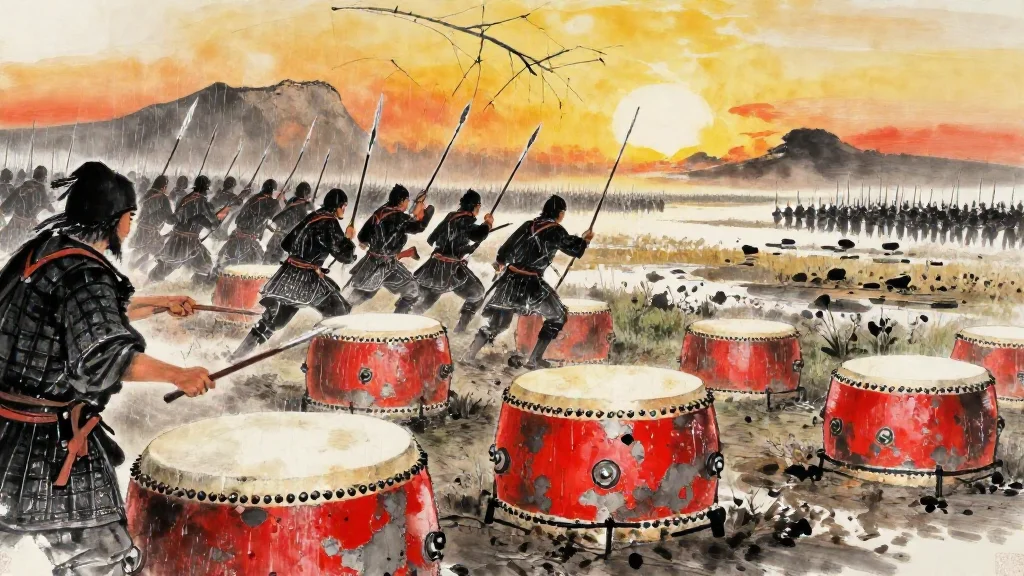
齊策二 (Stratagems of Qi II) — Chinese ink painting

Chapter 9 of 33 · Qi state

齊策二

Stratagems of Qi II

View:

韓齊為與國

Han and Qi Are Allied States

韓、齊為與國。張儀以秦、魏伐韓。齊王曰:「韓,吾與國也。秦伐之,吾將救之。」田臣思曰:「王之謀過矣,不如聽之。子噲與子之國,百姓不戴,諸侯弗與。秦伐韓,楚、趙必救之,是天下以燕賜我也。」王曰:「善。」乃許韓使者而遣之。

韓自以得交於齊,遂與秦戰。楚、趙果速起兵而救韓,齊因起兵攻燕,三十日而舉燕國。

Han and Qi were allied states. Zhang Yi led Qin and Wei in an attack on Han. The King of Qi said: "Han is our ally. If Qin attacks it, I should rescue it."

Tian Chensi said: "Your Majesty's plan is mistaken. Better to let events unfold. King Kuai of Yan gave his state to Zizhi — the people do not support them and the lords refuse to recognize them. If Qin attacks Han, Chu and Zhao will certainly rush to rescue it. That means All-Under-Heaven is handing us Yan as a gift."

The king said: "Excellent." He reassured the Han envoy and sent him home.

Han, believing it had secured Qi's alliance, went to war with Qin. Chu and Zhao did indeed quickly dispatch armies to rescue Han. Qi then raised its army and attacked Yan — conquering the entire state in thirty days.

Notes

1person燕王噲 / 子之Yān Wáng Kuài / Zǐzhī

King Kuai of Yan (燕王噲, r. 320–314 BC) infamously abdicated in favor of his minister Zizhi (子之) in 316 BC, an act that threw Yan into civil war and invited Qi's invasion in 314 BC.

2person田臣思Tián Chénsī

Tian Chensi (田臣思) is again the strategist from the Maling episode. His talent for identifying the real opportunity hidden behind the apparent crisis is on full display here.

3context

The cynicism here is breathtaking. Qi's ally Han is under attack, and Qi's response is not to rescue Han but to exploit the distraction. While everyone else is busy fighting over Han, Qi conquers Yan in a month. The key insight is that all the other states' attention is directed toward the Han crisis — making Yan, in its post-abdication chaos, an undefended target. Tian Chensi recognized that the most profitable war is the one nobody is watching.

張儀事秦惠王

Zhang Yi Serves King Hui of Qin

張儀事秦惠王。惠王死,武王立。左右惡張儀,曰:「儀事先王不忠。」言未已,齊讓又至。

張儀聞之,謂武王曰:「儀有愚計,願效之王。」王曰:「奈何?」曰:「為社稷計者,東方有大變,然後王可以多割地。今齊王甚憎張儀,儀之所在,必舉兵而伐之。故儀願乞不肖身而之梁,齊必舉兵而伐之。齊、梁之兵連於城下,不能相去,王以其間伐韓,入三川,出兵函谷而無伐,以臨周,祭器必出,挾天子,案圖籍,此王業也。」王曰:「善。」乃具革車三十乘,納之梁。

齊果舉兵伐之。梁王大怒。張儀曰:「王勿患,請令罷齊兵。」乃使其舍人馮喜之楚,藉使之齊。齊、楚之事已畢,因謂齊王:「王甚憎張儀,雖然,厚矣王之託儀於秦王也。」齊王曰:「寡人甚憎張儀,儀之所在,必舉兵伐之,何以托儀也?」對曰:「是乃王之託儀也。儀之出秦,因與秦王約曰:『為王計者,東方有大變,然後王可以多割地。齊王甚憎儀,儀之所在,必舉兵伐之。故儀願乞不肖身而之梁,齊必舉兵伐梁。梁、齊之兵連於城下不能去,王以其間伐韓,入三川,出兵函谷而無伐,以臨周,祭器必出,挾天子,案圖籍,是王業也。』秦王以為然,與革車三十乘而納儀於梁。而果伐之,是王內自罷而伐與國,廣鄰敵以自臨,而信儀於秦王也。此臣之所謂托儀也。」王曰:「善。」乃止。

Zhang Yi served King Hui of Qin. King Hui died, and King Wu succeeded him. Those around the new king spoke ill of Zhang Yi, saying: "Zhang Yi was disloyal to the late king." Before they had finished, complaints from Qi also arrived.

Zhang Yi heard of this and addressed King Wu: "I have a humble plan I wish to present to Your Majesty."

"What is it?"

"For the sake of the state: if a great upheaval occurs in the east, then Your Majesty can extract much territory. The King of Qi deeply hates Zhang Yi — wherever I go, he will certainly raise an army to attack. Therefore I beg to take my worthless self to Wei. Qi will certainly raise an army to attack Wei. While the armies of Qi and Wei are locked in combat beneath the walls and unable to disengage, Your Majesty can use the interval to attack Han, enter the Three Rivers region, march troops out of Hangu Pass unopposed, advance on Zhou, seize the ritual vessels, hold the Son of Heaven, and control the maps and registers — this is the foundation of imperial power."

The king said: "Excellent." He prepared thirty leather-covered chariots and sent Zhang Yi to Wei.

Qi did indeed raise an army to attack Wei. The King of Wei was furious.

Zhang Yi said: "Do not worry, Your Majesty. Allow me to make Qi withdraw."

He sent his retainer Feng Xi to Chu, and from there arranged an envoy to Qi. Once the Qi-Chu matter was settled, the envoy addressed the King of Qi: "Your Majesty deeply hates Zhang Yi. Even so, you have done Zhang Yi a great favor with the King of Qin."

The King of Qi said: "I deeply hate Zhang Yi — wherever he is, I raise an army to attack. How have I done him a favor?"

"That is precisely the favor. When Zhang Yi left Qin, he made a pact with the King of Qin: 'For the sake of the state, a great upheaval is needed in the east so Your Majesty can extract territory. The King of Qi hates me — wherever I go, he will attack. So I will go to Wei. Qi will attack Wei. While their armies are locked in combat, Your Majesty attacks Han, enters the Three Rivers, marches out of Hangu unopposed, advances on Zhou, seizes the ritual vessels, holds the Son of Heaven, and controls the registers — imperial power.' The King of Qin agreed and sent him to Wei with thirty chariots. And you did attack — which means you exhausted yourself attacking an allied state, expanded your neighbor's threat against yourself, and confirmed Zhang Yi's credibility with the King of Qin. That is what I mean by doing him a favor."

The king said: "I see." He called off the attack.

Notes

1person秦惠王 / 秦武王Qín Huì Wáng / Qín Wǔ Wáng

King Hui of Qin (秦惠王, r. 337–311 BC) was Zhang Yi's patron. King Wu of Qin (秦武王, r. 310–307 BC) succeeded him and was hostile to Zhang Yi's faction.

2context

Zhang Yi's scheme is a hall-of-mirrors con. He uses the King of Qi's hatred as a strategic asset: by going to Wei, he guarantees Qi will attack Wei (not Qin), creating the eastern distraction Qin needs to seize the Zhou heartland. When the scheme is revealed to the King of Qi, the king realizes he has been used as a puppet — his own hatred was the mechanism of his manipulation. But even the 'revelation' may be another layer of the con: by telling Qi the truth, Zhang Yi gets Qi to stop attacking Wei (which protects his current host) while leaving the King of Qi unable to act against him without confirming his role as Qin's unwitting tool.

3person馮喜Féng Xǐ

Feng Xi (馮喜) was Zhang Yi's retainer and trusted agent, used here as a cutout to deliver the message through Chu rather than directly — adding a layer of deniability.

犀首以梁為齊戰於承匡而不勝

Xishou Fights Qi at Chengkuang for Wei and Loses

犀首以梁為齊戰於承匡而不勝。張儀謂梁王不用臣言以危國。梁王因相儀,儀以秦、梁之齊合橫親。犀首欲敗,謂衛君曰:「衍非有怨於儀也,值所以為國者不同耳。君必解衍。」衛君為告儀,儀許諾,因與之參坐於衛君之前。犀首跪行,為儀千秋之祝。明日張子行,犀首送之至於齊疆。齊王聞之,怒於儀,曰:「衍也吾讎,而儀與之俱,是必與衍鬻吾國矣。」遂不聽。

Xishou fought at Chengkuang for Wei against Qi and did not win. Zhang Yi told the King of Wei that the king had not heeded his advice and had endangered the state. The King of Wei thereupon appointed Zhang Yi as chancellor. Zhang Yi used the Qin-Wei relationship to draw Qi into the east-west alignment.

Xishou wished to sabotage this. He told the lord of Wei: "I bear no grudge against Zhang Yi — we simply differ on how to serve our states. I beg you to reconcile us."

The lord of Wei conveyed this to Zhang Yi, who agreed. They sat together at a three-way audience before the lord of Wei. Xishou knelt and walked on his knees, offering Zhang Yi a toast of ten thousand years.

The next day Zhang Yi departed, and Xishou escorted him all the way to the Qi border. When the King of Qi heard of this, he was furious with Zhang Yi: "Xishou is my enemy, and Zhang Yi traveled with him — they must be conspiring to sell out my state." He refused to listen to Zhang Yi.

Notes

1person犀首 (公孫衍)Xīshǒu (Gōngsūn Yǎn)

Xishou (犀首, 'Rhinoceros Head') was the sobriquet of Gongsun Yan (公孫衍), a Wei general and Zhang Yi's chief rival. He championed the north-south coalition against Zhang Yi's east-west alignment.

2place

Chengkuang (承匡) was in modern Sui County, Henan.

3context

Xishou's sabotage is exquisitely simple: he publicly makes nice with Zhang Yi — kneeling, toasting, escorting him to the border — knowing that this ostentatious display of friendship will make the King of Qi suspicious. By performing reconciliation with his rival, Xishou poisons the very diplomatic mission the reconciliation was supposed to support. The lord of Wei (衛君, the small state of Wei, not the large state of Wei/梁) is used as an unwitting stage for this performance.

昭陽為楚伐魏

Zhao Yang Attacks Wei for Chu

昭陽為楚伐魏,覆軍殺將得八城,移兵而攻齊。陳軫為齊王使,見昭陽,再拜賀戰勝,起而問:「楚之法,覆軍殺將,其官爵何也?」昭陽曰:「官為上柱國,爵為上執珪。」陳軫曰:「異貴於此者何也?」曰:「唯令尹耳。」陳軫曰:「令尹貴矣!王非置兩令尹也,臣竊為公譬可也。楚有祠者,賜其舍人卮酒。舍人相謂曰:『數人飲之不足,一人飲之有餘。請畫地為蛇,先成者飲酒。』一人蛇先成,引酒且飲之,乃左手持卮,右手畫蛇,曰:『吾能為之足。』未成,一人之蛇成,奪其卮曰:『蛇固無足,子安能為之足。』遂飲其酒。為蛇足者,終亡其酒。今君相楚而攻魏,破軍殺將得八城,不弱兵,欲攻齊,齊畏公甚,公以是為名居足矣,官之上非可重也。戰無不勝而不知止者,身且死,爵且後歸,猶為蛇足也。」昭陽以為然,解軍而去。

Zhao Yang attacked Wei on Chu's behalf, destroying its army, killing its general, and taking eight cities. He then moved his forces to attack Qi.

Chen Zhen, as envoy for the King of Qi, met with Zhao Yang. He bowed twice in congratulation on the victory, then rose and asked: "Under Chu's system, what are the rank and title for one who destroys an army and kills its general?"

Zhao Yang said: "The office is Supreme Pillar of the State; the title is Supreme Holder of the Jade Tablet."

Chen Zhen said: "Is there anything higher than that?"

"Only the Chancellor."

Chen Zhen said: "The Chancellor is a high position indeed! But the king does not appoint two chancellors. Allow me a parable, if I may.

"In Chu there was a man who performed a sacrifice and gave his retainers a goblet of wine. The retainers said to each other: 'If several of us drink it, there is not enough. If one of us drinks it, there is plenty. Let us draw snakes on the ground — the first to finish drinks the wine.' One man finished his snake first and reached for the wine. But holding the goblet in his left hand, he drew with his right, saying: 'I can add feet to it.' Before he finished, another man completed his snake, snatched the goblet, and said: 'A snake has no feet — how can you add feet to one?' And he drank the wine. The man who drew feet on the snake lost his wine.

"Now you serve as Chu's general and attacked Wei — destroying the army, killing the general, taking eight cities. Without resting your forces, you wish to attack Qi. Qi fears you greatly. Your reputation from this is sufficient; there is no higher office to be gained. One who wins every battle but does not know when to stop will find his life in danger and his rank bestowed on another. This is drawing feet on a snake."

Zhao Yang agreed and withdrew his army.

Notes

1person昭陽Zhāo Yáng

Zhao Yang (昭陽) was a Chu general and minister, active in the early 3rd century BC. He held the title of Pillar of the State.

2context

This is the origin of the Chinese idiom 畫蛇添足 ('drawing feet on a snake'), meaning to ruin something by adding unnecessary embellishments. Chen Zhen's argument to Zhao Yang is not about Qi at all — it is about Chu court politics. He is saying: you have already peaked in rank; another victory gives you nothing, but a defeat or overextension destroys everything. The implicit threat is also clear: the one position above yours (Chancellor) is held by someone who would love to see you fail. Chen Zhen saves Qi from attack by persuading the attacker that his own success is his greatest danger.

3translation

上柱國 ('Supreme Pillar of the State') and 上執珪 ('Supreme Holder of the Jade Tablet') were among the highest ranks in the Chu aristocratic-military hierarchy. 令尹 is translated as 'Chancellor' — it was unique to Chu and combined the functions of chief minister and commander-in-chief.

秦攻趙

Qin Attacks Zhao

秦攻趙。趙令樓緩以五城求講於秦,而與之伐齊。齊主恐,因使人以十城求講於秦。樓子恐,因以上黨二十四縣許秦王。趙足之齊,謂齊王曰:「王欲秦、趙之解乎?不如從合於趙,趙必倍秦。倍秦則齊無患矣。」

Qin attacked Zhao. Zhao ordered Lou Huan to offer five cities to make peace with Qin and join Qin in attacking Qi. The ruler of Qi was alarmed and sent someone to offer ten cities to make peace with Qin.

Lou Huan grew alarmed in turn and offered the King of Qin twenty-four counties of Shangdang.

Zhao Zu went to Qi and said to the King of Qi: "Does Your Majesty wish Qin and Zhao to settle their conflict? Better to form a north-south coalition with Zhao — Zhao will certainly break with Qin. Once Zhao breaks with Qin, Qi has nothing to fear."

Notes

1person樓緩Lóu Huǎn

Lou Huan (樓緩) is the same Qin-connected diplomat who appeared in Qin ce si. Here he serves Zhao, offering escalating bribes to Qin.

2person趙足Zhào Zú

Zhao Zu (趙足) was a diplomat working to pull Qi into an alliance with Zhao against Qin.

3context

This is a bidding war conducted in territory. Zhao offers Qin five cities to make peace; Qi counters with ten cities; Zhao raises to twenty-four counties. Each party is desperate to avoid being the one Qin attacks next, and each outbid makes the others more desperate. Zhao Zu's intervention attempts to break the cycle by proposing that Zhao and Qi ally against Qin instead of competing to bribe it — a sensible suggestion, though the text does not record whether it worked.

4place

Shangdang (上黨) was the mountainous highland region of modern southeastern Shanxi. Its transfer to Qin (or refusal of transfer) later triggered the catastrophic battle of Changping (260 BC).

權之難齊燕戰

The Crisis at Quan: Qi and Yan at War

權之難,齊、燕戰。秦使魏冉之趙,出兵助燕擊齊。薛公使魏處之趙,謂李向曰:「君助燕擊齊,齊必急。急必以地和於燕,而身與趙戰矣。然則是君自為燕東兵,為燕取地也。故為君計者,不如按兵匆出。齊必緩,緩必復與燕戰。戰而勝,兵罷弊,趙可取唐、曲逆;戰而不勝,命懸於趙。然則吾中立而割窮齊與疲燕也,兩國之權,歸於君矣。」

During the crisis at Quan, Qi and Yan fought. Qin sent Wei Ran to Zhao to arrange for Zhao to dispatch troops to assist Yan against Qi.

The Lord of Xue sent Wei Chu to Zhao, who addressed Li Xiang: "If you assist Yan and strike Qi, Qi will be desperate. In its desperation, it will cede territory to make peace with Yan and then turn to fight Zhao. In that case, you will have served as Yan's vanguard and won territory for Yan, not for yourself.

"The better plan is to keep your army in reserve and not move. Without Zhao's intervention, Qi will relax and resume fighting Yan. If Qi wins, its army will be exhausted — Zhao can take Tang and Quni. If Qi loses, its fate hangs on Zhao's favor. Either way, you remain neutral while carving up an exhausted Qi and a depleted Yan. The strategic balance between the two states will rest in your hands."

Notes

1person魏冉Wèi Rǎn

Wei Ran (魏冉, d. c. 264 BC), also known as the Marquis of Rang (穰侯), was a powerful Qin minister and uncle of King Zhao through Queen Dowager Xuan.

2person薛公 / 李向Xuē Gōng / Lǐ Xiàng

The Lord of Xue (薛公) here is Lord Mengchang (孟嘗君, Tian Wen). Li Xiang (李向) was apparently a Zhao official.

3context

The advice to Zhao is the same 'sit and wait' strategy that Qi itself used at Guiling and Maling — let the two belligerents exhaust each other, then intervene to collect the spoils. Lord Mengchang is essentially teaching Zhao the same trick Qi perfected, which is somewhat ironic given that Qi would be the victim this time.

4place

Tang (唐) and Quni (曲逆) were Zhao-adjacent territories, near modern Dingzhou and Wanxian, Hebei.

秦攻趙長平

Qin Attacks Zhao at Changping

秦攻趙長平,齊、楚救之。秦計曰:「齊、楚救趙,親,則將退兵;不親,則且遂攻之。」

趙無以食,請粟於齊,而齊不聽。蘇秦謂齊王曰:「不如聽之以卻秦兵,不聽則秦兵不卻,是秦之計中,而齊、燕之計過矣。且趙之於燕、齊,隱蔽也,齒之有唇也,唇亡則齒寒。今日亡趙,則明日及齊、楚矣。且夫救趙之務,宜若奉漏壅,沃焦釜。夫救趙,高義也;卻秦兵,顯名也。義救亡趙,威卻強秦兵,不務為此,而務愛粟,則為國計者過矣。」

Qin attacked Zhao at Changping. Qi and Chu sent troops to rescue Zhao. Qin calculated: "If Qi and Chu are truly committed to rescuing Zhao, we will withdraw. If they are not committed, we will press the attack."

Zhao had no food and requested grain from Qi, but Qi refused. Su Qin addressed the King of Qi:

"Better to grant the grain and force Qin to withdraw. If you refuse, Qin's army will not withdraw — Qin's calculation will have been correct, and Qi and Yan's calculation will have been wrong.

"Moreover, Zhao serves as a shield for Yan and Qi — as lips are to teeth: when the lips are gone, the teeth grow cold. If Zhao falls today, Qi and Chu are next tomorrow.

"The urgency of rescuing Zhao is like plugging a leak or dousing a burning pot. To rescue Zhao is noble duty; to repel Qin's army is a glorious reputation. To perform the righteous act of saving a doomed Zhao and the mighty act of driving back Qin's forces — and instead to cling to grain — this is a grave miscalculation for the state."

Notes

1place

Changping (長平) was in modern Gaoping, Shanxi. The battle of Changping (260 BC) was the bloodiest engagement of the Warring States period — Qin's general Bai Qi reportedly buried alive 400,000 Zhao prisoners of war after their surrender.

2context

This episode captures the collective-action failure that doomed the eastern states. Zhao is fighting for its life at Changping and desperately needs grain; Qi refuses because grain is expensive and Zhao is far away. Su Qin's lip-and-teeth metaphor (唇亡齒寒) became one of the most famous idioms in the Chinese language — but the King of Qi apparently did not find it persuasive enough. History records that Qi did not send grain, Zhao was catastrophically defeated, and the balance of power shifted irreversibly in Qin's favor.

3translation

唇亡齒寒 ('when the lips are gone, the teeth grow cold') is one of the most frequently cited strategic maxims in Chinese. It describes the interdependence of buffer states: when one falls, the next is exposed.

或謂齊王

Someone Addresses the King of Qi

或謂齊王曰:「周、韓西有強秦,東有趙、魏。秦伐周、韓之西,趙、魏不伐,周、韓為割,韓卻周害也。及韓卻周割之,趙、魏亦不免與秦為患矣。今齊、秦伐趙、魏,則亦不果於趙、魏之應秦而伐周、韓。令齊入於秦而伐趙、魏,趙、魏亡之後,秦東面而伐齊,齊安得救天下乎!」

Someone said to the King of Qi: "Zhou and Han have strong Qin to their west and Zhao and Wei to their east. When Qin attacks the western borders of Zhou and Han, Zhao and Wei do not intervene — so Zhou and Han must cede territory. When Han and Zhou are forced to cede, Zhao and Wei will also inevitably face trouble with Qin.

"Now if Qi joins Qin in attacking Zhao and Wei, the result will be the same as when Zhao and Wei failed to help Zhou and Han against Qin. If Qi enters into Qin's service and attacks Zhao and Wei, once Zhao and Wei are destroyed, Qin will face east and attack Qi. How then will Qi be able to save All-Under-Heaven?"

Notes

1context

This is a straightforward domino-theory argument: each state that helps Qin destroy another state moves one step closer to being destroyed itself. The speaker's warning to Qi is essentially: you are helping the crocodile eat the other passengers in the hope that you will be eaten last. The logic is impeccable; the problem, as always in the Zhanguoce, is that impeccable logic rarely prevails over short-term self-interest.

Edition & Source

Text
《戰國策》 Zhanguoce
Edition
中華古詩文古書籍網 transcription
Commentary
鮑彪 (Bao Biao) Song dynasty commentary