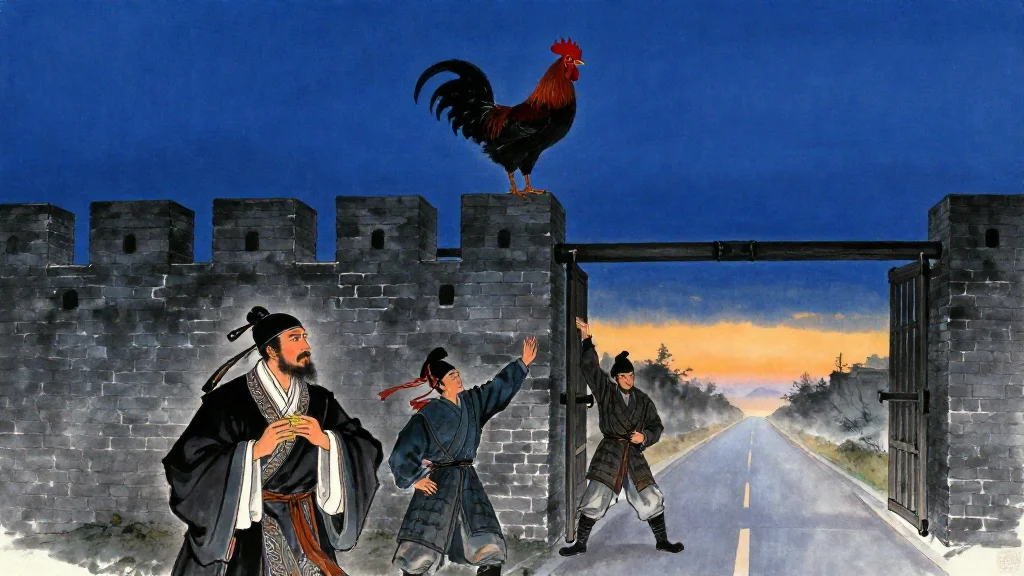
齊策三 (Stratagems of Qi III) — Chinese ink painting

Chapter 10 of 33 · Qi state

齊策三

Stratagems of Qi III

View:

楚王死

The King of Chu Dies

楚王死,太子在齊質。蘇秦謂薛公曰:「君何不留楚太子,以市其下東國。」薛公曰:「不可。我留太子,郢中立王,然則是我抱空質而行不義于于下也。」蘇秦曰:「不然。郢中立王,君因謂其新王曰:『與我下東國,吾為王殺太子。不然,吾將與三國共立之。』然則下東國必可得也。」

蘇秦之事,可以請行;可以令楚王亟入下東國;可以益割於楚;可以忠太子而使楚益入地;可以為楚王走太子;可以忠太子使之亟去;可以惡蘇秦於薛公;可以為蘇秦請封於楚;可以使說薛公以善蘇子;可以使蘇子自解於薛公。

蘇秦謂薛公曰:「臣聞謀泄者事無功,計不決者名不成。今君留太子者,以市下東國也。非亟得下東國者,則楚之計變,變則是君抱空質而負名於天下也。」薛公曰:「善。為之奈何?」對曰:「臣請為君之楚,使亟入下東國之地。楚得成,則君無敗矣。」薛公曰:「善。」因遣之。

謂楚王曰:「齊欲奉太子而立之。臣觀薛公之留太子者,以市下東國也。今王不亟入下東國,則太子且倍王之割而使齊奉己。」楚王曰:「謹受命。」因獻下東國。故曰可以使楚亟入地也。

謂薛公曰:「楚之勢可多割也。」薛公曰:「奈何?」「請告太子其故,使太子謁之君,以忠太子,使楚王聞之,可以益入地。」故曰可以益割於楚。

謂太子曰:「齊奉太子而立之,楚王請割地以留太子,齊少其地。太子何不倍楚之割地而資齊,齊必奉太子。」太子曰:「善。」倍楚之割而延齊。楚王聞之恐,益割地而獻之,尚恐事不成。故曰可以使楚益入地也。

謂楚王曰:「齊之所以敢多割地者,挾太子也。今已得地面求不止者,以太子權王也。故臣能去太子。太子去,齊無辭,必不倍於王也。王因馳強齊而為交,齊辭,必聽王。然則是王去仇而得齊交也。」楚王大悅,曰:「請以國因。」故曰可以為楚王使太子亟去也。

謂太子曰:「夫剬楚者王也,以空名市者太子也,齊未必信太子之言也,而楚功見矣。楚交成,太子必危矣。太子其圖之。」太子曰:「謹受命。」乃約車而暮去。故曰可以使太子急去也。

蘇秦使人請薛公曰:「夫勸留太子者蘇秦也。蘇秦非誠以為君也,且以便楚也。蘇秦恐君之知之,故多割楚以滅跡也。今勸太子者又蘇秦也,而君弗知,臣竊為君疑之。」薛公大怒於蘇秦。故曰可使人惡蘇秦於薛公也。

又使人謂楚王曰:「夫使薛公留太子者蘇秦也。奉王而代立楚太子者又蘇秦也,割地固約者又蘇秦也,忠王而走太子者又蘇秦也。今人惡蘇秦於薛公,以其為齊薄而為楚厚也。願王之知之。」楚王曰:「謹受命。」因封蘇秦為武貞君。故曰可以為蘇秦請封於楚也。

又使景鯉請薛公曰:「君之所以重於天下者,以能得天下之士而有齊權也。今蘇秦天下之辯士也,世與少有。君因不善蘇秦,則是圍塞天下士而不利說途也。夫不善君者且奉蘇秦,而於君之事殆矣。今蘇秦善於楚王,而君不蚤親,則是身與楚為仇也。故君不如因而親之,貴而重之,是君有楚也。」薛公因善蘇秦。故曰可以為蘇秦說薛公以善蘇秦。

The King of Chu dies, and the Crown Prince is being held hostage in Qi. Su Qin says to the Lord of Xue: "Why not detain the Chu Crown Prince and trade him for the Lower Eastern Territories?"

The Lord of Xue replies: "That will not work. If I detain the prince and they enthrone a new king in Ying, I will be left holding a worthless hostage while earning a reputation for injustice throughout All-Under-Heaven."

Su Qin says: "Not so. If they enthrone a new king in Ying, you simply tell that new king: 'Give me the Lower Eastern Territories and I will kill the Crown Prince for you. Otherwise, I will join with the Three States to enthrone him instead.' The Lower Eastern Territories will certainly be yours."

The affairs of Su Qin: he can arrange to be sent on this mission; he can compel the King of Chu to hand over the Lower Eastern Territories quickly; he can extract further territorial concessions from Chu; he can show loyalty to the Crown Prince while making Chu cede more land; he can make the King of Chu expel the Crown Prince; he can show loyalty to the Crown Prince by making him leave quickly; he can turn the Lord of Xue against Su Qin; he can secure an enfeoffment for Su Qin from Chu; he can persuade the Lord of Xue to treat Su Qin well; he can make Su Qin clear his own name with the Lord of Xue.

Su Qin says to the Lord of Xue: "I have heard that when plans are leaked, undertakings fail; when strategies are not decided, reputations are not made. Your purpose in detaining the Crown Prince is to trade him for the Lower Eastern Territories. If you do not obtain them quickly, Chu's calculations will change, and then you will be holding a worthless hostage and bearing dishonor before All-Under-Heaven."

The Lord of Xue says: "Good. What should we do?"

"Allow me to go to Chu on your behalf and make them hand over the Lower Eastern Territories at once. If Chu complies, you cannot lose."

The Lord of Xue says: "Good." And sends him.

Su Qin tells the King of Chu: "Qi intends to support the Crown Prince and enthrone him. I observe that the Lord of Xue is detaining the Crown Prince to trade him for the Lower Eastern Territories. If Your Majesty does not hand them over quickly, the Crown Prince will double your offer of territory and have Qi enthrone him instead."

The King of Chu says: "I respectfully accept your counsel." And surrenders the Lower Eastern Territories. Hence it is said: he can make Chu hand over territory quickly.

Su Qin tells the Lord of Xue: "Chu's position allows us to extract even more concessions."

The Lord of Xue asks: "How?"

"Let me inform the Crown Prince of the situation and have him petition you directly — showing loyalty to the Crown Prince. When the King of Chu hears of it, he can be made to cede more land."

Hence it is said: he can extract further concessions from Chu.

Su Qin tells the Crown Prince: "Qi is supporting you and will enthrone you. The King of Chu has offered to cede territory to keep you here, but Qi considers the offer insufficient. Why not double Chu's territorial offer and present it to Qi? Then Qi will certainly enthrone you."

The Crown Prince says: "Good." He doubles Chu's offer and presents it to Qi. The King of Chu hears of this and grows alarmed, ceding yet more territory, still fearing the deal will not hold. Hence it is said: he can make Chu cede more land.

Su Qin tells the King of Chu: "The reason Qi dares to demand so much territory is that it holds the Crown Prince. The reason demands keep growing even after you have ceded land is that the Crown Prince is using his position to pressure Your Majesty. I can make the Crown Prince leave. Once the Crown Prince is gone, Qi will have no leverage and certainly will not betray you. Your Majesty can then drive a strong alliance with Qi, and Qi, having no excuse to refuse, will comply. Thus you rid yourself of an enemy and gain Qi as an ally."

The King of Chu is delighted: "I place the resources of my state at your disposal."

Hence it is said: he can make the King of Chu expel the Crown Prince.

Su Qin tells the Crown Prince: "The one carving up Chu is the king himself; you, Your Highness, are merely trading on an empty title. Qi does not necessarily trust your word, and meanwhile Chu's concessions are already paid. Once Chu and Qi complete their alliance, Your Highness will be in danger. Consider this carefully."

The Crown Prince says: "I respectfully accept your counsel." He readies his carriage and departs that evening. Hence it is said: he can make the Crown Prince leave urgently.

Su Qin sends someone to tell the Lord of Xue: "It was Su Qin who advised you to detain the Crown Prince. But Su Qin was not truly acting in your interest — he was really serving Chu's convenience. Fearing you would discover this, he squeezed extra territory from Chu to cover his tracks. Now Su Qin has also been the one to help the Crown Prince leave, and you did not even know. I venture to suggest you be suspicious of him."

The Lord of Xue grows furious at Su Qin. Hence it is said: he can turn the Lord of Xue against Su Qin.

Su Qin also sends someone to tell the King of Chu: "It was Su Qin who made the Lord of Xue detain the Crown Prince. It was Su Qin who supported Your Majesty and replaced the Chu Crown Prince. It was Su Qin who secured the territorial agreement. It was Su Qin who, out of loyalty to Your Majesty, drove the Crown Prince away. Now someone has poisoned the Lord of Xue against Su Qin, saying he favored Qi less and Chu more. I hope Your Majesty will take note."

The King of Chu says: "I respectfully accept your counsel." And enfeoffs Su Qin as Lord Wuzhen. Hence it is said: he can secure an enfeoffment for Su Qin from Chu.

Su Qin also has Jing Li petition the Lord of Xue: "The reason you are respected throughout All-Under-Heaven is your ability to attract the world's best men and wield Qi's power. Su Qin is the finest debater in All-Under-Heaven — a talent rarely seen in any generation. If you alienate Su Qin, you will be blocking the path for all the world's persuaders. Those who bear you ill will rally around Su Qin, and your position will become precarious. Su Qin already enjoys the King of Chu's favor. If you do not befriend him first, you are making yourself Chu's enemy. Better to embrace him, honor him, and elevate him — then Chu is effectively yours."

The Lord of Xue accordingly treats Su Qin well. Hence it is said: he can persuade the Lord of Xue to treat Su Qin well.

Notes

1person薛公 / 孟嘗君Xuē Gōng / Mèngcháng Jūn

The Lord of Xue (薛公) is Tian Wen (田文), better known as Lord Mengchang (孟嘗君, d. 279 BC), the famous Qi aristocrat and patron of retainers. His fief was at Xue (modern Tengzhou, Shandong).

2person蘇秦Sū Qín

Su Qin (蘇秦, d. 284 BC), the most famous itinerant strategist of the Warring States period, traditionally credited with engineering the north-south anti-Qin coalition (合縱). This episode showcases his signature move: playing every side of a negotiation simultaneously.

3place

Ying (郢) was the capital of Chu, located near modern Jingzhou, Hubei. The 'Lower Eastern Territories' (下東國) referred to Chu's eastern possessions, probably in the Huai River region.

4context

This episode is one of the most cynically virtuosic passages in the Zhanguoce. The narrator lays out in advance all the moves Su Qin will execute — like showing the audience a magician's trick list before the show — and then demonstrates each one in sequence. Su Qin tells every party exactly what they want to hear, betrays each in turn, and ends up enfeoffed by Chu and reconciled with the Lord of Xue. The text presents this not as villainy but as the highest form of diplomatic craft.

5person景鯉Jǐng Lǐ

Jing Li (景鯉) was a Chu minister who appears several times in the Zhanguoce as an intermediary.

齊王夫人死

The Queen of Qi Dies

齊王夫人死,有七孺子皆近。薛公欲知所欲立,乃獻七珥,美其一,明日視美珥所在,勸王立為夫人。

The Queen of Qi dies. There are seven young consorts, all in the king's favor. The Lord of Xue wishes to know which one the king intends to elevate, so he presents seven jade earrings — making one notably more beautiful than the rest. The next day, he observes which woman is wearing the beautiful earring, and advises the king to make her queen.

Notes

1context

A perfect little anecdote about intelligence-gathering through gift-giving. The Lord of Xue doesn't ask the king directly — he lets the king reveal his own preference through his distribution of presents. The method is elegant: any woman given the finest earring is obviously the favorite, and by 'advising' the king to elevate her, the Lord of Xue earns credit for supporting a decision already made.

孟嘗君將入秦

Lord Mengchang Is About to Enter Qin

孟嘗君將入秦,止者千數而弗聽。蘇秦欲止之,孟嘗曰:「人事者,吾已盡知之矣;吾所未聞者,獨鬼事耳。」蘇秦曰:「臣之來也,固不敢言人事也,固且以鬼事見君。」

孟嘗君見之。謂孟嘗君曰:「今者臣來,過於淄上,有土偶人與桃梗相與語。桃梗謂土偶人曰:『子,西岸之土也,挺子以為人,至歲八月,降雨下,淄水至,則汝殘矣。』土偶曰:『不然。吾西岸之土也,土則復西岸耳。今子,東國之桃梗也,刻削子以為人,降雨下,淄水至,流子而去,則子漂漂者將何如耳。』今秦四塞之國,譬若虎口,而君入之,則臣不知君所出矣。」孟嘗君乃止。

Lord Mengchang is about to enter Qin. A thousand people try to dissuade him, but he will not listen. Su Qin wishes to stop him. Lord Mengchang says: "I already know everything there is to know about human affairs. The only thing I have not yet heard about is the affairs of ghosts."

Su Qin says: "I have certainly not come to speak of human affairs. I have come specifically to present ghost affairs to you."

Lord Mengchang receives him. Su Qin says: "As I was traveling here, I passed by the banks of the Zi River. There was a clay figurine and a peachwood effigy talking to each other. The peachwood effigy said to the clay figurine: 'You are made from the soil of the western bank. They shaped you into human form, but when the eighth month comes and the rains fall and the Zi River rises, you will be destroyed.'

"The clay figurine replied: 'Not so. I am soil from the western bank — when I dissolve, I simply return to the western bank. But you are a peachwood branch from the eastern lands. They carved you into human shape. When the rains fall and the Zi River rises and sweeps you away, you will drift helplessly — and where will you end up then?'

"Now Qin is a state enclosed by four mountain passes — it is like a tiger's mouth. If you enter it, I do not know how you will get out."

Lord Mengchang abandons the plan.

Notes

1context

Su Qin's rhetorical gambit here is perfect: Lord Mengchang has pre-emptively dismissed all 'human affairs' arguments, so Su Qin reframes his warning as a ghost story — a fable about figurines on a riverbank. The clay figure's retort to the peachwood effigy is the real point: the clay man at least dissolves into home territory, while the wooden figure will be swept away to nowhere. Lord Mengchang, a Qi man entering Qin, is the peachwood effigy.

2place

The Zi River (淄水) flows through the heartland of Qi, near its capital Linzi (臨淄, modern Zibo, Shandong). The reference grounds Su Qin's fable in Lord Mengchang's home territory.

3context

The 'four passes' (四塞) of Qin refer to Hangu Pass in the east, Wu Pass in the south, Xiao Pass in the west, and the northern mountain barrier. This natural fortress made Qin nearly impossible to invade — and equally difficult to leave without permission.

孟嘗君在薛

Lord Mengchang at Xue

孟嘗君在薛,荊人攻之。淳于髡為齊使於荊,還反過薛。而孟嘗令人體貌而親郊迎之。謂淳于髡曰:「荊人攻薛,夫子弗憂,文無以復侍矣。」淳于髡曰:「敬聞命。」

至於齊,畢報。王曰:「何見於荊?」對曰:「荊甚固,而薛亦不量其力。」王曰:「何謂也?」對曰:「薛不量其力,而為先王立清廟。荊固而攻之,清廟必危。故曰薛不量力,而荊亦甚固。」齊王和其顏色曰:「嘻!先君之廟在焉!」疾興兵救之。

顛蹶之請,望拜之謁,雖得則薄矣。善說者,陳其勢,言其方,人之急也,若自在隘窘之中,豈用強力哉!

Lord Mengchang is at Xue when Chu attacks. Chunyu Kun, serving as Qi's envoy to Chu, passes through Xue on his way back. Lord Mengchang sends people to receive him with full ceremony and personally goes out to the suburbs to welcome him. He says to Chunyu Kun: "Chu is attacking Xue. If you do not concern yourself with this, sir, then Wen will have no means of serving you in the future."

Chunyu Kun says: "I respectfully hear your command."

When he reaches Qi and finishes his report, the king asks: "What did you observe in Chu?"

Chunyu Kun replies: "Chu is very formidable, and Xue also overestimates its own strength."

The king asks: "What do you mean?"

"Xue overestimates its strength by having built a temple to the former kings there. Chu is formidable and is attacking it. The temple will certainly be in danger. Hence I say Xue overestimates its strength, and Chu is truly formidable."

The King of Qi's expression softens: "Ah! The temple of our former king is there!" He urgently raises troops to rescue Xue.

The narrator comments: Groveling petitions and kowtowing entreaties — even if they succeed, the result is thin. A skilled persuader sets forth the situation and explains the stakes so that the listener feels the urgency as if he himself were trapped. Where in this is any need for force?

Notes

1person淳于髡Chúnyú Kūn

Chunyu Kun (淳于髡) was one of Qi's most celebrated wits, famous for his indirect persuasion techniques. He served under King Wei and King Xuan of Qi. The Shiji devotes a section to him as a master of oblique remonstrance.

2context

Chunyu Kun never once asks the king to rescue Xue. He simply mentions, in passing, that the ancestral temple of Qi's former kings is there. The king immediately grasps that letting Chu destroy his own ancestors' shrine would be an intolerable disgrace. The narrator's closing commentary explicitly praises this technique: don't beg — just arrange the facts so the listener arrives at your desired conclusion on his own.

3translation

'Jing' (荊) is an alternate name for Chu, often used in texts from Qi and the northern states.

孟嘗君奉夏侯章

Lord Mengchang Provides for Xiahou Zhang

孟嘗君奉夏侯章以四馬百人之食,遇之甚歡。夏侯章每言未嘗不毀孟嘗君也。或以告孟嘗君,孟嘗君曰:「文有以事夏侯公矣,勿言。」董之繁菁以問夏侯公,夏侯公曰:「孟嘗君重非諸侯也,而奉我四馬百人之食。我無分寸之功而得此,然吾毀之以為之也。君所以得為長者,以吾毀之者也。吾以身為孟嘗君,豈得持言也。」

Lord Mengchang provides for Xiahou Zhang with a four-horse chariot and provisions for a hundred retainers, treating him with great warmth. Yet every time Xiahou Zhang speaks in public, he never fails to disparage Lord Mengchang.

Someone reports this to Lord Mengchang. He says: "Wen has his reasons for supporting Xiahou Zhang. Say no more."

Dong Zhifanjing inquires of Xiahou Zhang about this. Xiahou Zhang explains: "Lord Mengchang's status falls short of that of a feudal lord, yet he supports me with a four-horse chariot and provisions for a hundred retainers. I have not a shred of merit to justify this. My criticisms are actually my service to him. The reason he is considered a great man is precisely because I criticize him. I have given my very person in Lord Mengchang's service — how could I merely hold my tongue?"

Notes

1context

Xiahou Zhang's logic is counterintuitive but not unsound: if a patron's own pensioner praises him, nobody is impressed. But if the man receiving lavish support actively disparages his benefactor, onlookers conclude that the benefactor must be genuinely magnanimous to tolerate it. The criticism becomes a form of advertising. Whether Xiahou Zhang actually believes this or is simply rationalizing his ingratitude with a clever post-hoc justification is left as an exercise for the reader.

2person夏侯章Xiàhóu Zhāng

Xiahou Zhang (夏侯章) is otherwise unknown. The name Xiahou was common in the Qi-Lu region.

孟嘗君讌坐

Lord Mengchang Hosts a Banquet

孟嘗君讌坐,謂三先生曰:「願聞先生有以補之闕者。」一人曰:「訾天下之主,有侵君者,臣請以臣之血湔其衽。」田瞀曰:「車軼之所能至,請掩足下之短者,誦足下之長;千乘之君與萬乘之相,其欲有君也,如使而弗及也。」勝曰:「臣願以足下之府庫財物,收天下之士,能為君決疑應卒,若魏文侯之有田子方、段乾木也。此臣之所為君取矣。」

Lord Mengchang is hosting a banquet. He says to three gentlemen: "I would like to hear how each of you might remedy my deficiencies."

The first man says: "Should any ruler in All-Under-Heaven encroach upon you, I will wash his lapels with my own blood."

Tian Mao says: "Wherever carriages can reach, I will conceal your shortcomings and proclaim your virtues. The lords of a thousand chariots and the ministers of ten-thousand-chariot states — they will desire you as eagerly as if summoning a servant who cannot arrive fast enough."

Sheng says: "I would use the wealth from your treasuries to recruit the finest men in All-Under-Heaven, men who can resolve your doubts and respond to emergencies — just as Marquis Wen of Wei had Tian Zifang and Duan Ganmu. This is what I would secure for you."

Notes

1context

Three retainers, three styles of service. The first offers fanatical personal violence — essentially, 'I will assassinate anyone who threatens you.' The second offers PR and reputation management. The third offers strategic talent recruitment. Lord Mengchang, characteristically, does not choose between them. A man with three thousand retainers can afford all three.

2person田子方 / 段乾木Tián Zǐfāng / Duàn Gānmù

Tian Zifang (田子方) and Duan Ganmu (段乾木) were famous scholars whom Marquis Wen of Wei (魏文侯, r. 445–396 BC) patronized. Wei's early hegemony was attributed partly to its ability to attract such men.

孟嘗君舍人有與君之夫人相愛者

A Retainer of Lord Mengchang Has an Affair with His Wife

孟嘗君舍人有與君之夫人相愛者。或以問孟嘗君曰:「為君舍人而內與夫人相愛,亦甚不義矣,君其殺之。」君曰:「睹貌而相悅者,人之情也,其錯之勿言也。」

居期年,君召愛夫人者而謂之曰:「子與文游久矣,大官未可得,小官公又弗欲。衛君與文布衣交,請具車馬皮幣,願君以此從衛君游。」於衛甚重。

齊、衛之交惡,衛君甚欲約天下之兵以攻齊。是人謂衛君曰:「孟嘗君不知臣不肖,以臣欺君。且臣聞齊、衛先君,刑馬壓羊,盟曰:『齊、衛後世無相攻伐,有相攻伐者,令其命如此。』今君約天下之兵以攻齊,是足下倍先君盟約而欺孟嘗君也。願君勿以齊為心。君聽臣則可;不聽臣,若臣不肖也,臣輒以頸血湔足下衿。」衛君乃止。

齊人聞之曰:「孟嘗君可語善為事矣,轉禍為功。」

One of Lord Mengchang's retainers is having an affair with the lord's wife. Someone tells Lord Mengchang: "Your retainer is carrying on with your wife inside your own household — this is deeply dishonorable. You should kill him."

The lord says: "To see a beautiful person and feel desire — this is human nature. Let the matter rest and say no more."

A year passes. The lord summons the man who loves his wife and says to him: "You have been with me a long time. You have not been able to obtain a high post, and you disdain the low ones. The lord of Wei and I are old friends. Allow me to equip you with carriages, horses, furs, and silk — I hope you will go and serve the lord of Wei."

The man becomes highly valued in Wei.

Later, relations between Qi and Wei sour, and the lord of Wei desperately wants to assemble a coalition army to attack Qi. The man says to the lord of Wei: "Lord Mengchang, not knowing what a worthless person I am, entrusted me to Your Lordship. Moreover, I have heard that the former lords of Qi and Wei once sacrificed a horse and slaughtered a ram, swearing an oath: 'Let Qi and Wei never attack each other in generations to come; should either do so, let his fate be as this animal's.' Now Your Lordship is assembling the world's armies to attack Qi — this is to break your ancestors' oath and to betray Lord Mengchang. I beg you not to set your heart against Qi. If you will not listen to me — worthless as I am — I will wash your collar with the blood of my own throat."

The lord of Wei abandons the plan.

The people of Qi, hearing of this, say: "Lord Mengchang truly knows how to manage affairs — he turns disaster into advantage."

Notes

1context

This is one of the most celebrated anecdotes about Lord Mengchang's management style. A lesser lord would have had the adulterer killed. Lord Mengchang instead plants a grateful, deeply obligated agent in a foreign court — someone who owes him everything and knows it. When the crisis comes, the investment pays off spectacularly. The man is willing to die rather than let Wei attack Qi. Whether Lord Mengchang's initial 'tolerance' was genuine magnanimity or cold-blooded long-term planning is the entire point: in the Zhanguoce's world, the distinction does not matter.

孟嘗君有舍人而弗悅

Lord Mengchang Has a Retainer He Dislikes

孟嘗君有舍人而弗悅,欲逐之。魯連謂孟嘗君曰:「猿獼猴錯木據水,則不若魚鱉;歷險乘危,則騏驥不如狐狸。曹沫之奮三尺之劍,一軍不能當;使曹沫釋其三尺之劍,而操銚鎒與農夫居壠畝之中,則不若農夫。故物舍其所長,之其所短,堯亦有所不及矣。今使人而不能,則謂之不肖;教人而不能,則謂之拙。拙則罷之,不肖則棄之,使人有棄逐,不相與處,而來害相報者,豈非世之立教首也哉!」孟嘗君曰:「善!」乃弗逐。

Lord Mengchang has a retainer he dislikes and wants to dismiss. Lu Zhonglian says to Lord Mengchang: "If you take a monkey from the trees and put it in water, it is no match for fish and turtles. Over rough terrain and steep passes, even a thoroughbred is no match for a fox. Cao Mo brandishing his three-foot sword could hold off an entire army; but make Cao Mo put down his sword and take up a hoe to work alongside farmers in the fields, and he would be no match for a peasant.

"Every creature, when deprived of its strengths and placed at its weaknesses, falls short — even Yao himself would be found wanting. Now if you employ someone and he fails, you call him incompetent. If you instruct someone and he fails, you call him clumsy. The clumsy you dismiss; the incompetent you discard. Making people feel rejected and cast out, unwilling to live alongside them — does this not breed enmity and reprisal? Is this not the foundation of trouble in the world?"

Lord Mengchang says: "Well said!" And does not dismiss the retainer.

Notes

1person魯仲連Lǔ Zhòngliān

Lu Zhonglian (魯仲連, also called Lu Lian, fl. 260s BC) was a freelance intellectual from Qi who refused all official positions. He is one of the most admired figures in the Zhanguoce — a man who intervened in crises purely on principle and then vanished. His argument here is characteristically generous: everyone has a niche; the problem is placement, not character.

2person曹沫Cáo Mò

Cao Mo (曹沫, also written 曹劌) was a Lu general of the Spring and Autumn period famous for his daring. He held Duke Huan of Qi hostage at a diplomatic meeting and forced him to return captured Lu territory — a feat later celebrated in Sima Qian's biographies of assassins.

孟嘗君出行國至楚

Lord Mengchang Travels to Chu

孟嘗君出行國,至楚,獻象床。郢之登徒,直使送之,不欲行。見孟嘗君門人公孫戍曰:「臣,郢之登徒也,直送象床。象床之直千金,傷此若髮漂,賣妻子不足償之。足下能使仆無行,先人有寶劍,願得獻之。」公孫曰:「諾。」

入見孟嘗君曰:「君豈受楚象床哉?」孟嘗君曰:「然。」公孫戍曰:「臣願君勿受。」孟嘗君曰:「何哉?」公孫戍曰:「小國所以皆致相印於君者,聞君於齊能振達貧窮,有存亡繼絕之義。小國英桀之士,皆以國事累君,誠說君之義,慕君之廉也。今君到楚而受象床,所未至之國,將何以待君?臣戍願君勿受。」孟嘗君曰:「諾。」

公孫戍趨而去。未出,至中閨,君召而返之,曰:「子教文無受象床,甚善。今何舉足之高,志之揚也?」公孫戍曰:「臣有大喜三,重之寶劍一。」孟嘗君曰:「何謂也?」公孫戍曰:「門下百數,莫敢入諫,臣獨入諫,臣一喜;諫而得聽,臣二喜;諫而止君之過,臣三喜。輸象床,郢之登徒不欲行,許戍以先人之寶劍。」孟嘗君:「善,受之乎?」公孫戍曰:「未敢。」

曰:「急受之。」因書門版曰:「有能揚文之名,止文之過,私得寶於外者,疾入諫!」

Lord Mengchang is traveling abroad and arrives in Chu, where he receives a gift of an ivory bed. A porter from Ying is assigned to deliver it, but he does not want to go. He visits Lord Mengchang's retainer Gongsun Shu and says: "I am a porter from Ying, assigned to transport the ivory bed. The bed is worth a thousand pieces of gold. If I so much as scratch it, I could sell my wife and children and still not cover the cost. If you can get me out of this assignment, I have an ancestral sword I would like to present to you."

Gongsun Shu says: "Done."

He goes in to see Lord Mengchang: "My lord, you have accepted an ivory bed from Chu?"

Lord Mengchang says: "Yes."

Gongsun Shu says: "I beg you not to accept it."

"Why?"

"The reason all the smaller states have offered you the seal of chief minister is that they have heard you are a man who in Qi raises up the poor and distressed, who preserves fallen states and continues broken lineages. The finest men of the small states all entrust their national affairs to you precisely because they admire your righteousness and respect your integrity. If you now accept an ivory bed from Chu, what will the states you have not yet visited offer you? I, Shu, beg you not to accept it."

Lord Mengchang says: "Very well."

Gongsun Shu hurries out. But before he has left — he is only at the inner gate — the lord calls him back: "You taught me not to accept the ivory bed, and that was excellent. But why are you walking with such a spring in your step, looking so pleased with yourself?"

Gongsun Shu says: "I have three great joys, plus a bonus sword. No one among your hundred-odd retainers dared come in and remonstrate — I alone dared to, that is my first joy. My remonstrance was heeded, that is my second joy. My remonstrance corrected your error, that is my third joy. The porter assigned to transport the ivory bed did not want to go, and he promised me an ancestral sword."

Lord Mengchang says: "Good. Have you accepted it?"

"I did not dare."

"Accept it at once!" He then writes on the gate board: "Anyone who can enhance Wen's reputation, correct Wen's errors, and privately receive treasure for doing so — come in immediately and remonstrate!"

Notes

1context

Lord Mengchang's final gesture — posting an open invitation for people to profit personally from giving him good advice — is characteristically pragmatic. He does not pretend that Gongsun Shu's motives were pure, nor does he care. The advice was good. The sword was the incentive that produced good advice. Therefore: more swords, more good advice. The Zhanguoce loves this kind of unsentimental alignment of private interest and public benefit.

2translation

A 'dengtu' (登徒) was a government porter or laborer conscripted for transport duties — the lowest rung of state service. The poor man's terror at being responsible for a priceless ivory bed is entirely relatable.

淳于髡一日而見七人於宣王

Chunyu Kun Presents Seven Men to King Xuan in a Single Day

淳于髡一日而見七人於宣王。王曰:「子來,寡人聞之,千里而一士,是比肩而立;百世而一聖,若隨踵而至也。今子一朝而見七士,則士不亦眾乎?」淳于髡曰:「不然。夫鳥同翼者而聚居,獸同足者而俱行。今求柴胡、桔梗於沮澤,則累世不得一焉。及之皋黍、梁父之陰,則郄車而載耳。夫物各有疇,今髡賢者之疇也。王求士於髡,譬若挹水於河,而取火於燧也。髡將復見之,豈特七士也?」

Chunyu Kun presents seven men to King Xuan of Qi in a single day. The king says: "Come now — I have heard it said that one worthy man per thousand li means they are standing shoulder to shoulder, and one sage per hundred generations means they are treading on each other's heels. Now you present seven men in a single morning. Are worthy men really so numerous?"

Chunyu Kun replies: "Not at all. Birds of the same feather flock together; beasts with the same hooves travel in packs. If you search for thoroughwort and bellflower in a marsh, you will not find a single plant in generations of looking. But go to the slopes of Gao and the shaded side of Mount Liangfu, and you can fill carts with them. Every species has its habitat. I, Kun, am the habitat of worthy men. If Your Majesty seeks worthy men through me, it is like drawing water from a river or striking fire from flint. I intend to present more — why stop at seven?"

Notes

1person齊宣王Qí Xuān Wáng

King Xuan of Qi (齊宣王, r. 319–301 BC) was known for patronizing scholars at the Jixia Academy, the famous intellectual gathering place near Linzi.

2place

Mount Liangfu (梁父) is near modern Tai'an, Shandong, at the foot of Mount Tai. Gao (皋) and Shu (黍) may refer to highland areas known for medicinal herbs.

3context

Chunyu Kun's ecological metaphor is doing double work: it reassures the king that finding seven good men is not suspicious, while also asserting that Chunyu Kun himself is the indispensable talent pipeline. You don't question the river for having too much water.

齊欲伐魏

Qi Intends to Attack Wei

齊欲伐魏。淳于髡謂齊王曰:「韓子盧者,天下之疾犬也。東郭逡者,海內之狡兔也。韓子盧逐東郭逡,環山者三,騰山者五,兔極於前,犬廢於後,犬兔俱罷,各死其處。田父見之,無勞倦之苦,而擅其功。今齊、魏久相持,以頓其兵,弊其眾,臣恐強秦大楚承其後,有田父之功。」齊王懼,謝將休士也。

Qi intends to attack Wei. Chunyu Kun says to the King of Qi: "Han Zilu is the fastest hound in All-Under-Heaven. Dongguo Qun is the cleverest rabbit within the seas. Han Zilu chases Dongguo Qun — three times around the mountain, five times over it. The rabbit collapses in front, the hound falls behind, and both dog and hare drop dead where they lie. A farmer comes along — no toil, no exertion — and takes them both.

"Now if Qi and Wei exhaust each other in prolonged conflict, wearing down their armies and wearying their people, I fear mighty Qin and great Chu will come along behind and enjoy the farmer's profit."

The King of Qi grows alarmed, dismisses his generals, and rests his troops.

Notes

1context

This is the origin of the famous Chinese idiom 鷸蚌相爭,漁翁得利 ('when the snipe and the clam fight, the fisherman profits') — though the Zhanguoce version uses a dog, a rabbit, and a farmer. The fable became one of the most widely cited arguments against war in Chinese political rhetoric: don't exhaust yourself fighting a peer when a predator is watching from the sidelines.

2translation

Han Zilu (韓子盧) and Dongguo Qun (東郭逡) appear to be the proper names of a legendary hound and rabbit respectively — stock characters in Warring States fables about futile pursuit.

國子曰秦破馬服君之師

Guozi Says: Qin Destroyed the Army of the Lord of Mafu

國子曰:「秦破馬服君之師,圍邯鄲。齊、魏亦佐秦伐邯鄲,齊取淄鼠,魏取伊是。公子無忌為天下循便計,殺晉鄙,率魏兵以救邯鄲之圍,使秦弗有而失天下。是齊入於魏而救邯鄲之功也。安邑者,魏之柱國也;晉陽者,趙之柱國也;鄢郢者,楚之柱國也。故三國欲與秦壤界,秦伐魏取安邑,伐趙取晉陽,伐楚取鄢郢矣。福三國之君,兼二周之地,舉韓氏取其地,且天下之半。今又劫趙、魏,疏中國,封衛之東野,兼魏之河南,絕趙之東陽,則趙、魏亦危矣。趙、魏危,則非齊之利也。韓、魏、趙、楚之志,恐秦兼天下而臣其君,故專兵一志以逆秦。三國之於秦壤界而患急,齊不與秦壤界而患緩。是以天下之勢,不得不事齊也。故秦得齊,則權重於中國;趙、魏、楚得齊,則足以敵秦。故秦、趙、魏得齊者重,失齊者輕。齊有此勢,不能以重於天下者何也?其用者過也。」

Guozi says: "Qin destroyed the army of the Lord of Mafu and besieged Handan. Qi and Wei both aided Qin in attacking Handan — Qi seized Zishu and Wei seized Yishi. Prince Wuji, making the most advantageous calculation on behalf of All-Under-Heaven, killed Jin Bi, led Wei's troops to relieve the siege of Handan, and denied Qin its prize, thus rescuing All-Under-Heaven. This was Qi lending its forces to Wei to save Handan.

"Anyi is the pillar of Wei; Jinyang is the pillar of Zhao; Yan-Ying is the pillar of Chu. These three states sought to share borders with Qin — and Qin attacked Wei and took Anyi, attacked Zhao and took Jinyang, attacked Chu and took Yan-Ying. Qin has overthrown the rulers of three states, absorbed the lands of the Two Zhous, conquered Han and seized its territory — this amounts to half of All-Under-Heaven. Now Qin further coerces Zhao and Wei, drives a wedge through the central states, absorbs Wei's eastern frontier, annexes Wei's territories south of the Yellow River, and cuts off Zhao's Dongyang. Then Zhao and Wei will also be in danger. And if Zhao and Wei are endangered, that is not in Qi's interest.

"The aim of Han, Wei, Zhao, and Chu is to prevent Qin from swallowing All-Under-Heaven and reducing their rulers to subjects. Therefore they concentrate their armies with a single purpose: to oppose Qin. The three states share borders with Qin and feel the threat acutely; Qi does not share a border with Qin, and so the threat feels remote. For this reason the dynamics of All-Under-Heaven compel all states to court Qi. When Qin wins Qi's support, Qin's power becomes dominant in the central states. When Zhao, Wei, and Chu win Qi's support, they can match Qin. Whichever side obtains Qi grows strong; whichever side loses Qi grows weak.

"Qi holds this pivotal position, yet cannot leverage it to dominate All-Under-Heaven. Why? Because those who wield its power have blundered."

Notes

1person趙括 / 馬服君Zhào Kuò / Mǎfú Jūn

The Lord of Mafu (馬服君) is Zhao Kuo (趙括), the Zhao general whose catastrophic defeat at Changping in 260 BC resulted in the massacre of 400,000 Zhao soldiers by the Qin general Bai Qi. This is one of the most notorious military disasters in Chinese history.

2person信陵君 / 公子無忌Xìnlíng Jūn / Gōngzǐ Wújì

Prince Wuji (公子無忌) is Lord Xinling (信陵君, d. 243 BC), one of the Four Lords of the Warring States. His unauthorized seizure of Wei's army to rescue Zhao at Handan in 257 BC — after killing the obstructionist general Jin Bi — is one of the most famous episodes in the Shiji.

3context

Guozi's analysis is a clear-eyed assessment of Qi's strategic position as a swing state. Qi is geographically remote from Qin, which makes it safe but also complacent. Every other state needs Qi's support, which gives Qi enormous leverage it consistently fails to use. The final line — 'those who wield its power have blundered' — is a damning verdict on Qi's leadership.

4place

Anyi (安邑, modern Xia County, Shanxi) was Wei's original capital before the move to Daliang. Jinyang (晉陽, modern Taiyuan, Shanxi) was Zhao's strategic stronghold. Yan-Ying (鄢郢) refers to Chu's capital region near modern Jingzhou, Hubei.

Edition & Source

Text
《戰國策》 Zhanguoce
Edition
中華古詩文古書籍網 transcription
Commentary
鮑彪 (Bao Biao) Song dynasty commentary