燕策三 (Stratagems of Yan III) — Chinese ink painting

Chapter 31 of 33 · Yan state

燕策三

Stratagems of Yan III

View:

齊韓魏共攻燕

Qi, Han, and Wei Attack Yan Together

齊、韓、魏共攻燕,燕使太子請救於楚。楚王使景陽將而救之。暮舍,使左右司馬各營壁地,已,稙表。景陽怒曰:「女所營者,水皆至滅表。此焉可以舍!」乃令徙。明日大雨,山水大出,所營者水皆滅表,軍吏乃服。於是遂不救燕,而攻魏雍丘,取之以與宋。三國懼,乃罷兵。魏軍其西,齊軍其東,楚軍欲還不可得也。景陽乃開西和門,晝以車騎,暮以燭見,通使於魏。齊師怪之,以為燕、楚與魏謀之,乃引兵而去。齊兵已去,魏失其與國,無以共擊楚,乃夜遁。楚師乃還。

Qi, Han, and Wei jointly attack Yan. Yan sends its crown prince to request rescue from Chu. The King of Chu dispatches Jing Yang to lead a relief force.

At the evening encampment, Jing Yang orders his left and right marshals to each mark out a campsite, and when they finish, to plant markers. Jing Yang inspects the sites and is furious: "The sites you have marked — water will rise to cover every one of these markers. This is no place to camp!" He orders the army to relocate.

The next day a great rainstorm hits. Mountain floodwaters pour down and submerge every marker at the original campsites. The army officers are awed.

Jing Yang then decides not to rescue Yan directly but instead attacks Wei's city of Yongqiu, takes it, and gives it to Song. The three attacking states are alarmed and withdraw their forces.

But now Wei's army is to the west, Qi's army is to the east, and the Chu army, trying to return home, cannot get through. Jing Yang opens the western peace gate. By day he sends chariots and cavalry, and by night torches are visible — he is openly communicating with Wei. Qi's forces find this suspicious and conclude that Chu and Wei have struck a deal. Qi withdraws.

Once Qi has departed, Wei has lost its ally and has no means to fight Chu alone. Wei slips away in the night. The Chu army returns home.

Notes

1person景陽Jǐng Yáng

Jing Yang (景陽) was a Chu general known for tactical cleverness. His reading of the terrain to predict flooding demonstrates the kind of field craft that the Warring States military texts prize.

2context

Jing Yang's strategy unfolds in three moves, each more elegant than the last. First, he demonstrates supernatural-seeming competence with the flood prediction, earning his officers' total confidence. Second, instead of marching north to rescue Yan (which would mean fighting three armies), he attacks Yongqiu — a Wei city — and gives it to Song, which scares the coalition into disbanding. Third, when he is trapped between two hostile armies, he fakes an alliance with Wei using nothing but daytime cavalry parades and nighttime torches. Qi falls for the bluff and leaves; Wei, now isolated, also leaves. Three problems solved without a single pitched battle.

3place

Yongqiu (雍丘) was a Wei city, located near modern Qi County (杞縣), Henan.

張醜為質於燕

Zhang Chou Is Held Hostage in Yan

張醜為質於燕,燕王欲殺之,走且出境,境吏得醜。醜曰:「燕王所為將殺我者,人有言我有寶珠也,王欲得之。今我已亡之矣,而燕王不我信。今子且致我,我且言子之奪我珠而吞之,燕王必當殺子,刳子腹及子之腸矣。夫欲得之君,不可說以利。吾要且死,子腸亦且寸絕。」境吏恐而赦之。

Zhang Chou is being held as a hostage in Yan. The King of Yan wants to kill him. He flees and is about to cross the border when a border guard catches him.

Zhang Chou says: "The reason the King of Yan wants to kill me is that someone told him I possess a precious pearl, and the king wants it. But I have already lost it, and the King of Yan does not believe me. Now you are about to turn me in. When you do, I will tell the king that you seized my pearl and swallowed it. The king will certainly kill you, slit open your belly, and search through your intestines. A ruler driven by greed cannot be dissuaded by reason. I am going to die regardless — but your guts will be cut to pieces too."

The border guard is terrified and lets him go.

Notes

1person張醜Zhāng Chǒu

Zhang Chou (張醜) appears only in this anecdote. His name, which literally means 'Zhang the Ugly,' may be a pseudonym.

2context

This is a pure game-theory vignette. Zhang Chou has no leverage and no escape — except the ability to credibly threaten to take the guard down with him. The pearl may or may not exist; it does not matter. What matters is that the king's greed makes the threat credible. The guard's rational move is to let Zhang Chou go, because the alternative is having his intestines searched. Sometimes the best negotiating position is 'I am already dead, but I can make sure you are too.'

燕王喜使栗腹以百金為趙孝成王壽

King Xi of Yan Sends Li Fu to Toast King Xiaocheng of Zhao

燕王喜使栗腹以百金為趙孝成王壽,酒三日,反報曰:「趙民其壯者皆死於長平,其孤未壯,可伐也。」王乃召昌國君樂間而問曰:「何如?」對曰:「趙,四達之國也,其民皆習於兵,不可與戰。」王曰:「吾以倍攻之,可乎?」曰:「不可。」曰:「以三,可乎?」曰:「不可。」王大怒。左右皆以為趙可伐,遽起六十萬以攻趙。令栗腹以四十萬攻鄗,使慶秦以二十萬攻代。趙使廉頗以八萬遇栗腹於鄗,使樂乘以五萬遇慶秦於代。燕人大敗。樂間入趙。

燕王以書且謝焉,曰:「寡人不佞,不能奉順君意,故君捐國而去,則寡人之不肖明矣。敢端其願,而君不肯聽,故使使者陳愚意,君試論之。語曰:『仁不輕絕,智不輕怨。』君之於先王也,世之所明知也。寡人望有非則君掩蓋之,不虞君之明罪之也;望有過則君教誨之,不虞君之明罪之也。且寡人之罪,國人莫不知,天下莫不聞,君微出明怨以棄寡人,寡人必有罪矣。雖然,恐君之未盡厚也。諺曰:『厚者不毀人以自益也,仁者不危人以要名。』以故掩人之邪者,厚人之行也;救人之過者,仁者之道也。世有掩寡人之邪,救寡人之過,非君心所望之?今君厚受位於先王以成尊,輕棄寡人以快心,則掩邪以救過,難得於君矣。且世有薄於故厚施,行有失而故惠用。今使寡人任不肖之罪,而君有失厚之累,於為君擇之也,無所取之。國之有封疆,猶家之有垣牆,所以合好掩惡也。室不能相和,出語鄰家,未為通計也。怨惡未見而明棄之,未盡厚也。寡人雖不省乎,未如殷紂之亂也;君雖不得意乎,未如商容、箕子之累也。然則不內蓋寡人,而明怨於外,恐其適足以傷於高而薄於行也,非然也。苟可以明君之義,成君之高,雖任惡名,不難受也。本欲以為明寡人之薄,而君不得厚;揚寡人之辱,而君不得榮。此一舉而兩失也。義者不虧人以自益也,況傷人以自損乎!願君無以寡人不肖,累往事之美。昔者柳下惠吏於魯,三黜而不去。或謂之曰:『可以去。』柳下惠曰:『苟與人之異,惡往而不黜乎?猶且黜乎,寧於故國爾。』柳下惠不以三黜自累,故前業不忘;不以去為心,故遠近無議。今寡人之罪,國人未知,而議寡人者遍天下。語曰:『論不修心,議不累物,仁不輕絕,智不簡功。』棄大功者,輟也;輕絕厚利者,怨也。輟而棄之,怨而累之,宜在遠者,不望之乎君也。今以寡人無罪,君豈怨之乎?願君捐怨,追惟先王,復以教寡人。意君曰,余且匿心以成而過,不顧先王以明而惡,使寡人進不得修功,退不得改過,君之所揣也。唯君圖之。此寡人之愚意也。敬以書謁之。」

樂間、樂乘怨不用其計,二人卒留趙,不報。

King Xi of Yan sends Li Fu with a hundred pieces of gold to offer birthday congratulations to King Xiaocheng of Zhao. Li Fu drinks with the Zhao court for three days, then returns and reports: "Zhao's able-bodied men all died at Changping. The orphans have not yet grown up. Zhao can be attacked."

The king summons Lord Changguo, Yue Jian, and asks: "What do you think?"

Yue Jian replies: "Zhao is a crossroads state. Its people are all experienced in war. You cannot fight them."

The king says: "What if I attack with double their numbers?"

"That will not work."

"With triple?"

"That will not work."

The king flies into a rage. His courtiers all say Zhao can be attacked. He immediately mobilizes six hundred thousand troops against Zhao: Li Fu with four hundred thousand to attack Hao, and Qing Qin with two hundred thousand to attack Dai.

Zhao dispatches Lian Po with eighty thousand to meet Li Fu at Hao, and Yue Cheng with fifty thousand to meet Qing Qin at Dai. The Yan army is catastrophically defeated. Yue Jian defects to Zhao.

The King of Yan writes a letter combining reproach and apology:

"I am without talent. I could not follow your wishes, and so you abandoned the state and left — which makes my unworthiness plain for all to see. I earnestly set forth my wishes, and you refused to listen, so I send this envoy to present my humble thoughts, which I ask you to consider.

"The saying goes: 'The humane do not sever ties lightly; the wise do not nurse grievances lightly.' Your relationship with the late king is well known to the world. I had hoped that if I were in error, you would cover for me — I did not expect you to publicly condemn me. I had hoped that if I made mistakes, you would instruct me — I did not expect you to publicly condemn me.

"Moreover, my crimes are known to every person in the state and heard throughout All-Under-Heaven. For you to subtly manifest your resentment and openly abandon me — I certainly have my faults. Even so, I fear you have not shown the fullest generosity.

"The proverb says: 'The generous do not tear others down to benefit themselves; the humane do not endanger others to claim a reputation.' Therefore, to cover another's faults is the conduct of a generous man; to rescue another from error is the way of the humane. Is there anyone in the world who might cover my faults and rescue me from error — is that not what you, in your heart, might hope to be?

"Now you received your high position from the late king and gained your honor through it, yet you lightly abandon me for your own satisfaction. To cover faults and rescue from error — this, it seems, is hard to obtain from you.

"Moreover, there are cases where a man begins poorly yet receives generous treatment, where conduct falls short yet grace is still extended. Now if I must bear the guilt of unworthiness, and you acquire the taint of disloyalty, then choosing on your behalf, I see nothing to recommend this course.

"A state has borders, just as a house has walls — they exist to preserve harmony and conceal what is ugly. When a household cannot get along and goes complaining to the neighbors, that is not wise strategy. To abandon a man openly when no visible offense has occurred — that is not the fullest generosity.

"Even if I am not observant, I am not so disordered as Tyrant Zhou of Yin. Even if you are frustrated, your burden is not as heavy as that of Shang Rong or Jizi. If you do not cover for me internally but instead air your grievances externally, I fear this will damage your reputation for loftiness and diminish your conduct — unless that is not the case.

"If making your righteous stance clear and establishing your lofty reputation requires me to bear a bad name, I will not refuse it. But the intent is to expose my shallowness — while you gain no credit for depth. To advertise my disgrace — while you gain no glory. This is a move that produces two losses at once. The righteous do not diminish others to benefit themselves — how much less should they harm others to damage themselves as well!

"I beg you not to let my unworthiness tarnish the beauty of past deeds. Long ago, Liuxia Hui served as an official in Lu and was dismissed three times but did not leave. Someone told him he could go. Liuxia Hui said: 'If I am different from other men, where could I go and not be dismissed? Since I will be dismissed regardless, I would rather it be in my homeland.' Because Liuxia Hui did not let three dismissals burden him, his former achievements were not forgotten. Because he did not set his heart on leaving, neither near nor far did anyone criticize him.

"Now my crimes are not yet known to my own people, and yet those who criticize me are spread across All-Under-Heaven. The saying goes: 'In deliberation, do not cultivate grudges. In discussion, do not accumulate grievances. The humane do not sever ties lightly. The wise do not dismiss achievements casually.' To discard great achievements is abandonment. To lightly sever ties of substantial benefit is resentment. Abandonment and discard, resentment and burden — these are things expected of distant men, not hoped for from you.

"Since I am without crime, why would you bear a grudge? I beg you to set aside your resentment, remember the late king, and once again instruct me. Perhaps you will say: 'I will conceal my feelings to enable your errors, disregarding the late king to expose your wickedness, leaving you unable to advance in achievement or retreat to correct mistakes' — is this what you intend? I ask you to consider it. These are my foolish thoughts. I respectfully submit them in writing."

Yue Jian and Yue Cheng resent that their counsel was not heeded. Both remain in Zhao and do not reply.

Notes

1person燕王喜Yān Wáng Xǐ

King Xi of Yan (燕王喜, r. 254–222 BC) was the last king of Yan. Where his predecessor King Zhao was patient and strategic, King Xi was impulsive and vainglorious — a combination that proved fatal for his state.

2person栗腹Lì Fù

Li Fu (栗腹) was a Yan general whose intelligence assessment — 'Zhao's men died at Changping, the orphans haven't grown up yet' — was technically correct and strategically catastrophic. He was telling the king what the king wanted to hear.

3person樂間Yuè Jiàn

Yue Jian (樂間), Lord Changguo, was the son of the great Yue Yi. He inherited his father's title and his father's strategic judgment — and, like his father, ended up fleeing to Zhao when the king refused to listen.

4person廉頗Lián Pō

Lian Po (廉頗) was one of the most famous generals of the Warring States period. Here, at Hao, he destroys a Yan force five times his size — a result that makes Li Fu's intelligence report look especially foolish.

5context

The contrast between sections 9 (King Zhao's letter to Yue Yi) and this section is devastating and clearly intentional. King Zhao's letter was concise and apologetic; King Xi's letter is bloated, self-pitying, and manipulative. King Zhao lost Yue Yi through a single act of suspicion but acknowledged his error with dignity; King Xi ignores Yue Jian's correct advice, launches a disastrous war, gets his army annihilated by Lian Po, and then writes a letter blaming Yue Jian for leaving. The Yue family's response — they simply do not reply — is the most eloquent judgment possible.

6context

The Battle of Changping (長平之戰, 260 BC) was the bloodiest battle of the Warring States period, in which Qin reportedly massacred 400,000 Zhao prisoners. Li Fu's assessment that Zhao was weakened in its aftermath was correct. What he failed to understand was that a nation traumatized by mass slaughter does not become easy to defeat — it becomes desperate, hardened, and intensely motivated. Lian Po with 80,000 scarred veterans destroyed Li Fu's 400,000 raw conscripts.

7person柳下惠Liǔxià Huì

Liuxia Hui (柳下惠) was a legendary official of Lu, famous for his integrity and equanimity. The story of his three dismissals became proverbial for patient service despite mistreatment. King Xi's attempt to invoke this precedent — essentially telling Yue Jian to be like Liuxia Hui and stay loyal despite being ignored — is tone-deaf given that King Xi just got his army destroyed by ignoring Yue Jian's advice.

秦並趙北向迎燕

Qin Annexes Zhao and Turns North Toward Yan

秦並趙,北向迎燕。燕王聞之,使人賀秦王。使者過趙,趙王系之。使者曰:「秦、趙為一,而天下服矣。茲之所以受命於趙者,為秦也。今臣使秦,而趙系之,是秦、趙有郄。秦、趙有郄,天下必不服,而燕不受命矣。且臣之使秦,無妨於趙之伐燕也。」趙王以為然而遣之。

使者見秦王曰:「燕王竊聞秦並趙,燕王使使者賀千金。」秦王曰:「夫燕無道,吾使趙有之,子何賀?」使者曰:「臣聞全趙之時,南鄰為秦,北下曲陽為燕,趙廣三百里,而與秦相距五十餘年矣,所以不能反勝秦者,國小而地無所取。今王使趙北並燕,燕、趙同力,必不復受於秦矣。臣切為王患之。」

秦王以為然,起兵而救燕。

Qin annexes Zhao and turns north toward Yan. The King of Yan, hearing this, sends an envoy to congratulate the King of Qin. The envoy passes through Zhao, and the King of Zhao detains him.

The envoy says: "When Qin and Zhao are united, All-Under-Heaven submits. The reason I accepted this mission through Zhao was for Qin's sake. Now I am on a mission to Qin, and Zhao detains me — this suggests a rift between Qin and Zhao. If there is a rift between Qin and Zhao, All-Under-Heaven will not submit, and Yan will not accept your commands. Moreover, my mission to Qin does nothing to prevent Zhao from attacking Yan."

The King of Zhao agrees and releases him.

The envoy sees the King of Qin and says: "The King of Yan has humbly heard that Qin has annexed Zhao, and sends an envoy with congratulations of a thousand pieces of gold."

The King of Qin says: "Yan is lawless. I have given it to Zhao to deal with. What is there to congratulate?"

The envoy says: "I have heard that when Zhao was intact, its southern neighbor was Qin and to the north below Quyang was Yan. Zhao was three hundred li wide and contested with Qin for over fifty years. The reason it could never prevail against Qin was that its state was small and had nowhere to expand. Now if Your Majesty allows Zhao to annex Yan to the north, Yan and Zhao united in strength will certainly no longer submit to Qin. I am privately anxious about this on Your Majesty's behalf."

The King of Qin agrees and raises an army to rescue Yan.

Notes

1context

This anonymous envoy is a minor masterpiece of adaptive rhetoric. Detained by Zhao, he talks his way free by arguing that holding him creates the appearance of a Qin-Zhao rift (which serves nobody). Then, arriving in Qin, he reverses the entire frame: instead of congratulating Qin on destroying Zhao, he warns Qin that a Zhao-Yan merger would create a stronger enemy than Zhao alone. He gets Qin to rescue Yan — which was presumably his mission all along, disguised as a congratulatory visit.

燕太子丹質於秦亡歸

Crown Prince Dan of Yan Escapes from Qin

燕太子丹質於秦,亡歸。見秦且滅六國,兵以臨易水,恐其禍至。太子丹患之,謂其太傅鞫武曰:「燕、秦不兩立,願太傅幸而圖之。」武對曰:「秦地遍天下,威脅韓、魏、趙氏,則易水以北,未有所定也。奈何以見陵之怨,欲排其逆鱗哉?」太子曰:「然則何由?」太傅曰:「請入,圖之。」

居之有間,樊將軍亡秦之燕,太子容之。太傅鞫武諫曰:「不可。夫秦王之暴,而積怨於燕,足為寒心,又況聞樊將軍之在乎!是以委肉當餓虎之蹊,禍必不振矣!雖有管、晏,不能為謀。願太子急遣樊將軍入匈奴以滅口。請西約三晉,南連齊、楚,北講於單于,然後乃可圖也。」太子丹曰:「太傅之計,曠日彌久,心惛然,恐不能須臾。且非獨於此也。夫樊將軍困窮於天下,歸身於丹,丹終不迫於強秦,而棄所哀憐之交置之匈奴,是丹命固卒之時也。願太傅更慮之。」鞫武曰:「燕有田光先生者,其智深,其勇沉,可與之謀也。」太子曰:「願因太傅交于田先生,可乎?」鞫武曰:「敬諾。」出見田光,道太子曰:「願圖國事於先生。」田光曰:「敬奉教。」乃造焉。

太子跪而逢迎,卻行為道,跪地拂席。田先生坐定,左右無人,太子避席而請曰:「燕、秦不兩立,願先生留意也。」田光曰:「臣聞騏驥盛壯之時,一日而馳千里。至其衰也,駑馬先之。今太子聞光壯盛之時,不知吾精已消亡矣。雖然,光不敢以乏國事也。所善荊軻,可使也。」太子曰:「願因先生得願交於荊軻,可乎?」田光曰:「敬諾。」即起,趨出。太子送之至門,曰:「丹所報,先生所言者,國大事也,願先生勿泄也。」田光俯而笑曰:「諾。」

僂行見荊軻,曰:「光與子相善,燕國莫不知。今太子聞光壯盛之時,不知吾形已不逮也,幸而教之曰:『燕、秦不兩立,願先生留意也。』光竊不自外,言足下於太子,願足下過太子於宮。」荊軻曰:「謹奉教。」田光曰:「光聞長者之行,不使人疑之,今太子約光曰:『所言者,國之大事也,願先生勿泄也。』是太子疑光也。夫為行使人疑之,非節俠士也。」欲自殺以激荊軻,曰:「願足下急過太子,言光已死,明不言也。」遂自刄而死。

軻見太子,言田光已死,明不言也。太子再拜而跪,膝下行流涕,有頃而後言曰:「丹所請田先生無言者,欲以成大事之謀,今田先生以死明不泄言,豈丹之心哉?」荊軻坐定,太子避席頓首曰:「田先生不知丹不肖,使得至前,願有所道,此天所以哀燕不棄其孤也。今秦有貪饕之心,而欲不可足也,非盡天下之地,臣海內之王者,其意不饜。今秦已虜韓王,盡納其地,又舉兵南伐楚,北臨趙。王翦將數十萬之眾臨漳、鄴,而李信出太原、雲中。趙不能支秦,必入臣。入臣,則禍至燕。燕小弱,數困於兵,今計舉國不足以當秦。諸侯服秦,莫敢合從。丹之私計,愚以為誠得天下之勇士,使於秦,窺以重利,秦王貪其贄,必得所願矣。誠得劫秦王,使悉反諸侯之侵地,若曹沫之與齊桓公,則大善矣;則不可,因而刺殺之。彼大將擅兵於外,而內有大亂,則君臣相疑。以其間諸侯,諸侯得合從,其償破秦必矣。此丹之上願,而不知所以委命,惟荊卿留意焉。」久之,荊軻曰:「此國之大事,臣駑下,恐不足任使。」太子前頓首,固請無讓。然後許諾。於是尊荊軻為上卿,舍上舍,太子日日造問,供太牢異物,間進車騎美女,恣荊軻所欲,以順適其意。

久之,荊軻未有行意。秦將王翦破趙,虜趙王,盡收其地,進兵北略地,至燕南界。太子丹恐懼,乃請荊卿曰:「秦兵旦暮渡易水,則雖欲長侍足下,豈可得哉?」荊卿曰:「微太子言,臣願得謁之。今行而無信,則秦未可親也。夫今樊將軍,秦王購之金千斤,邑萬家。誠能得樊將軍首,與燕督亢之地圖獻秦王,秦王必說見臣,臣乃得有以報太子。」太子曰:「樊將軍以窮困來歸丹,丹不忍以己之私,而傷長者之意,願足下更慮之。」

荊軻知太子不忍,乃遂私見樊於期曰:「秦之遇將軍,可謂深矣。父母宗族,皆為戮沒。今聞購將軍之首,金千斤,邑萬家,將奈何?」樊將軍仰天太息流涕曰:「吾每念,常痛於骨髓,顧計不知所出耳。」

軻曰:「今有一言,可以解燕國之患,而報將軍之仇者,何如?」樊於期乃前曰:「為之奈何?」荊軻曰:「願得將軍之首以獻秦,秦王必喜而善見臣,臣左手把其袖,而右手揕抗其胸,然則將軍之仇報,而燕國見陵之恥除矣。將軍豈有意乎?」樊於期偏袒扼腕而進曰:「此臣日夜切齒拊心也,乃今得聞教。」遂自刎。太子聞之,馳往,伏屍而哭,極哀。既已,無可奈何,乃遂收盛樊於期之首,函封之。

於是,太子預求天下之利匕首,得趙人徐夫人之匕首,取之百金,使工以藥淬之,以試人,血濡縷,人無不立死者。乃為裝遣荊軻。燕國有勇士秦武陽,年十二,殺人,人不敢與忤視。乃令秦武陽為副。荊軻有所待,欲與俱,其人居遠未來,而為留待。頃之未發。太子遲之,疑其有改悔,乃復請之曰:「日以盡矣,荊卿豈無意哉?丹請先遣秦武陽。」荊軻怒,叱太子曰:「今日往而不反者,豎子也!今提一匕首入不測之強秦,仆所以留者,待吾客與俱。今太子遲之,請辭決矣。」遂發。

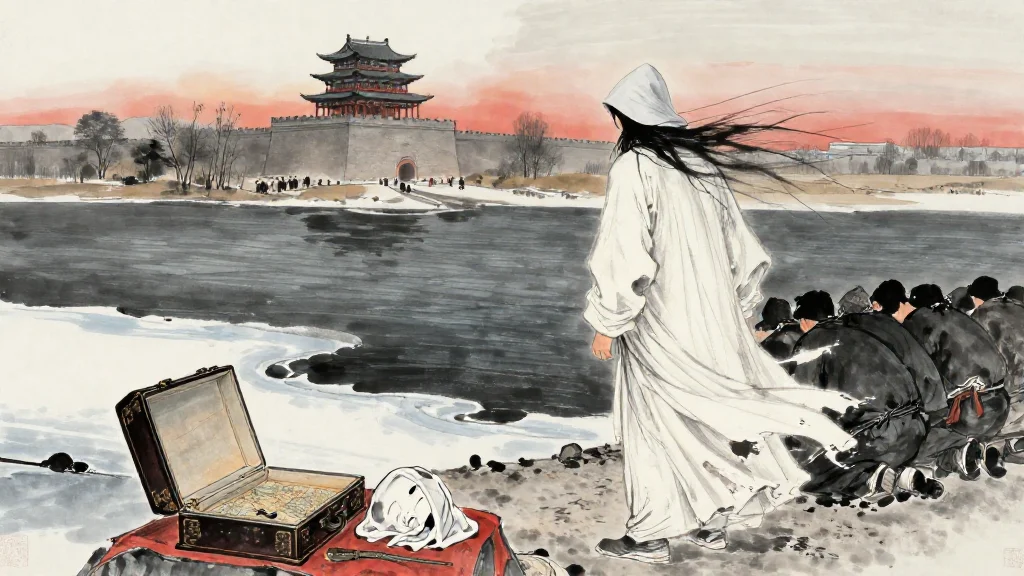
太子及賓客知其事者,皆白衣冠以送之。至易水上,既祖,取道。高漸離擊築,荊軻和而歌,為變徵之聲,士皆垂淚涕泣。又前而為歌曰:「風蕭蕭兮易水寒,壯士一去兮不復還。」復為忼慨羽聲,士皆睹目,發盡上指冠。於是荊軻遂就車而去,終已不顧。

既至秦,持千金之資幣物,厚遺秦王寵臣中庶子蒙嘉。嘉為先言於秦王曰:「燕王誠振畏慕大王之威,不敢興兵以拒大王,願舉國為內臣,比諸侯之列,給貢職如郡縣,而得奉守先王之宗廟。恐懼不敢自陳,謹斬樊於期頭,及獻燕之督亢之地圖,函封,燕王拜送於庭,使使以聞大王。唯大王命之。」

秦王聞之,大喜。乃朝服,設九賓,見燕使者鹹陽宮。荊軻奉樊於期頭函,而秦武陽奉地圖匣,以次進。至陛下。秦武陽色變振恐,群臣怪之,荊軻顧笑武陽,前為謝曰:「北蠻夷之鄙人,未嘗見天子,故振懼,願大王少假借之,使畢使於前。」秦王謂軻曰:「起,取武陽所持圖。」軻既取圖奉之,發圖,圖窮而匕首見。因左手把秦王之袖,而右手持匕首揕抗之。未至身,秦王驚,自引而起,絕袖。拔劍,劍長,摻其室。時怨急,劍堅,故不可立拔。荊軻逐秦王,秦王還柱而走。群臣驚愕,卒起不意,盡失其度。而秦法,群臣侍殿上者,不得持尺兵。諸郎中執兵,皆陳殿下,非有詔,不得上。方急時,不及召下兵,以故荊軻逐秦王,而卒惶急無以擊軻,而乃以手共搏之。是時侍醫夏無且,以其所奉藥囊提軻。秦王之方還柱走,卒惶急不知所為,左右乃曰:「王負劍!王負劍!」遂拔以擊荊軻,斷其左股。荊軻廢,乃引其匕首提秦王,不中,中柱。秦王復擊軻,被八創。軻自知事不就,倚柱而笑,箕踞以罵曰:「事所以不成者,乃欲以生劫之,必得約契以報太子也。」左右既前斬荊軻,秦王目眩良久。而論功賞群臣及當坐者,各有差。而賜夏無且黃金二百鎰,曰:「無且愛我,乃以藥囊提軻也。」

於是,秦大怒燕,益發兵詣趙,調王翦軍以伐燕。十月而拔燕薊城。燕王喜、太子丹等,皆率其精兵東保於遼東。秦將李信追擊燕王,王急,用代王嘉計,殺太子丹,欲獻之秦。秦復進兵攻之。五歲而卒滅燕國,而虜燕王喜,秦兼天下。

其後荊軻客高漸離以擊築見秦皇帝,而以築擊秦皇帝,為燕報仇,不中而死。

Crown Prince Dan of Yan has been a hostage in Qin and escapes home. Seeing that Qin is on the verge of annihilating the six states and its armies are approaching the Yi River, he fears the catastrophe is imminent. Prince Dan is distraught and says to his Grand Tutor Ju Wu: "Yan and Qin cannot coexist. I beg the Grand Tutor to devise a plan."

Ju Wu replies: "Qin's territory covers All-Under-Heaven. Its power threatens Han, Wei, and Zhao. The lands north of the Yi River are not yet secure. How can you, nursing a personal grudge, attempt to stroke the dragon's scales the wrong way?"

The prince says: "Then what is to be done?"

The Grand Tutor says: "Allow me to retire and think on it."

Some time passes. General Fan escapes from Qin and comes to Yan. The prince takes him in. Grand Tutor Ju Wu remonstrates: "This is dangerous. The King of Qin is violent and has already accumulated grievances against Yan — enough to make one's blood run cold. How much worse when he hears that General Fan is here! This is like placing raw meat across a hungry tiger's path. The disaster will be irreversible. Even Guan Zhong and Yan Ying could not plan a way out. I beg the prince to send General Fan to the Xiongnu immediately to eliminate any pretext. Then negotiate alliances with the Three Jin to the west, link up with Qi and Chu to the south, and make peace with the Chanyu to the north. Only then can we formulate a plan."

Prince Dan says: "The Grand Tutor's plan requires too much time. My heart is in turmoil — I fear we have not even a moment. And it is not only that. General Fan was desperate and destitute throughout All-Under-Heaven and entrusted himself to me. I will never, under pressure from mighty Qin, abandon a man who came to me in his hour of need and cast him among the Xiongnu. This is the moment my fate is decided. I beg the Grand Tutor to reconsider."

Ju Wu says: "In Yan there is a Master Tian Guang. His wisdom runs deep; his courage is steady. He is someone you can consult."

The prince says: "Could I, through the Grand Tutor, arrange a meeting with Master Tian?"

Ju Wu says: "Respectfully agreed." He goes out to see Tian Guang and conveys the prince's words: "He wishes to consult with you on a matter of state."

Tian Guang says: "I respectfully accept." And goes to call on the prince.

The prince kneels to welcome him, walks backward to lead the way, kneels again and sweeps the mat. When Master Tian is seated and there is no one around, the prince leaves his mat and says: "Yan and Qin cannot coexist. I beg you, sir, to give this your attention."

Tian Guang says: "I have heard that the thoroughbred in its prime can gallop a thousand li in a day. But in its decline, even a nag outruns it. The prince has heard of me in my prime, but does not know that my spirit has already faded. Even so, I dare not let my inadequacy neglect a matter of state. There is a man I hold in esteem — Jing Ke. He can be sent."

The prince says: "Could I, through you, sir, be introduced to Jing Ke?"

Tian Guang says: "Respectfully agreed." He rises and hurries out. The prince escorts him to the gate and says: "What I have disclosed, and what you, sir, have discussed — these are great matters of state. I beg you not to reveal them."

Tian Guang looks down, smiles, and says: "Agreed."

He walks, stooped with age, to see Jing Ke and says: "You and I are close — everyone in Yan knows this. The prince has heard of me in my prime but does not know that my body is no longer up to the task. He has been kind enough to tell me: 'Yan and Qin cannot coexist. I beg you to give this your attention.' I have taken the liberty of recommending you to the prince. I ask you to go see the prince at the palace."

Jing Ke says: "I respectfully accept."

Tian Guang says: "I have heard that the conduct of a man of honor does not invite suspicion. But the prince told me: 'What we have discussed is a great matter of state. I beg you not to reveal it.' This means the prince doubts me. When a man's conduct invites suspicion, he is not a true knight-errant." He intends to kill himself to spur Jing Ke to action: "I beg you to go to the prince at once and tell him that Tian Guang is dead — to prove that I have not spoken."

He cuts his own throat and dies.

Jing Ke goes to see the prince and tells him that Tian Guang is dead, proof that he did not speak. The prince bows twice, kneels, shuffles forward on his knees weeping, and after a long moment says: "The reason I asked Master Tian not to speak was to bring the great plan to fruition. That Master Tian has died to prove his silence — was that ever my intention?"

When Jing Ke is seated, the prince leaves his mat, bows his head to the ground, and says:

"Master Tian did not know how unworthy I am, yet he arranged for you to come before me and hear my plea. This is heaven taking pity on Yan and not abandoning its orphan. Qin's appetite is insatiable. It will not be satisfied until it has consumed every inch of All-Under-Heaven and made vassals of every ruler within the seas. Qin has already captured the King of Han and absorbed all his territory. It has raised armies to attack Chu to the south and presses Zhao from the north. Wang Jian leads hundreds of thousands of troops to the banks of the Zhang and toward Ye, while Li Xin advances from Taiyuan and Yunzhong. Zhao cannot withstand Qin and must submit. Once Zhao submits, the calamity reaches Yan.

"Yan is small and weak, repeatedly battered by war. By my reckoning, the entire state is not enough to withstand Qin. The other lords have submitted to Qin, and none dares join a coalition. My private plan — foolish as it may be — is this: if we can truly obtain the bravest warrior All-Under-Heaven has to offer and send him to Qin, dangling rich profits before the Qin king, the king's greed for the gifts will ensure he grants an audience.

"If we can seize the King of Qin and force him to return all the territory he has taken from the other lords — as Cao Mo did with Duke Huan of Qi — that would be the best outcome. If that fails, we assassinate him. With his great generals commanding armies abroad and great upheaval within, ruler and ministers will suspect each other. In the resulting chaos, the other lords can form a coalition, and the defeat of Qin will be certain. This is my highest hope. But I do not know to whom to entrust my life. I ask only that you, Sir Jing, give this your attention."

After a long silence, Jing Ke says: "This is a great matter of state. I am dull and lowly — I fear I am not equal to the mission."

The prince kneels and bows his head to the floor, earnestly begging him not to refuse. Jing Ke then agrees.

The prince thereupon honors Jing Ke as Senior Minister, lodges him in the finest residence, visits him daily, provides the grand sacrifice and rare delicacies, and periodically presents chariots, horses, and beautiful women — indulging Jing Ke's every desire to suit his mood.

Much time passes, and Jing Ke shows no sign of departing. Qin's General Wang Jian destroys Zhao, captures the King of Zhao, seizes all Zhao's territory, and advances north, conquering as he goes, until he reaches Yan's southern border.

Prince Dan is terrified and says to Jing Ke: "Qin's troops will cross the Yi River any day now. Even if I wished to attend you forever, how could that be possible?"

Jing Ke says: "Even without the prince's words, I was about to request this mission. But to go without credentials would mean Qin cannot be approached. Now, General Fan — the King of Qin has placed a bounty of a thousand jin of gold and a fief of ten thousand households on his head. If I could obtain General Fan's head, together with a map of Yan's Dukang territory, and present them to the King of Qin, the king will certainly be delighted to receive me, and I will have a chance to repay the prince."

The prince says: "General Fan came to me in desperate poverty. I cannot bear, for my own private ends, to hurt a man of honor's feelings. I beg you to reconsider."

Jing Ke knows the prince cannot bring himself to do it. So he goes privately to see Fan Yuqi and says: "Qin's treatment of the general has been cruel beyond measure. Your parents and your entire clan have been executed. Now I hear there is a bounty on your head — a thousand jin of gold and a fief of ten thousand households. What will you do?"

General Fan looks up at heaven, heaves a great sigh, weeps, and says: "Every time I think of it, the pain reaches my marrow. But I have no plan."

Jing Ke says: "Now I have a proposal that would resolve Yan's crisis and avenge the general's wrong. What do you say?"

Fan Yuqi steps forward: "What would you have me do?"

Jing Ke says: "I ask for the general's head to present to Qin. The King of Qin will certainly be delighted and grant me an audience. I will seize his sleeve with my left hand and drive a dagger into his chest with my right. Then the general's vendetta will be avenged and Yan's humiliation erased. Is the general willing?"

Fan Yuqi bares one shoulder, grips his wrist, and steps forward: "This is what I have gnashed my teeth and beaten my breast over day and night. Now at last I hear the way." He cuts his own throat.

The prince hears of it, races to the scene, throws himself on the body, and weeps in utter grief. When there is nothing more to be done, he has Fan Yuqi's head collected and sealed in a box.

The prince has already procured the sharpest dagger in All-Under-Heaven — the dagger of Xu Furen of Zhao, bought for a hundred pieces of gold — and has had artisans temper it with poison. Tested on a man, the blood soaks the fabric and the man dies instantly.

He outfits Jing Ke for the journey. In Yan there is a warrior named Qin Wuyang who killed a man at the age of twelve; no one dares meet his gaze. Qin Wuyang is made Jing Ke's second. Jing Ke is waiting for someone — he wants this person to accompany him — but the man lives far away and has not yet arrived, so Jing Ke delays.

After some time with no departure, the prince grows impatient and suspects Jing Ke is having second thoughts. He says: "The days are running out. Does Sir Jing have no intention of going? Let me send Qin Wuyang ahead."

Jing Ke is furious and rebukes the prince: "To go today with no return — that is what a boy does! I am carrying a single dagger into the unfathomable might of Qin. The reason I have delayed is that I am waiting for my associate to travel with me. Since the prince finds me slow, I request leave to depart now." He sets out.

The prince and the retainers who know the mission all dress in white caps and robes to see him off. At the Yi River bank, after the road sacrifice, they take to the road. Gao Jianli strikes the zhu, and Jing Ke sings in harmony — in the mournful bian-zhi mode. Every knight weeps.

Jing Ke steps forward and sings:

"The wind howls, the Yi River is cold. The warrior departs and does not return."

Then he shifts to the fierce yu mode, full of righteous indignation. Every knight's eyes go wide; their hair rises until it lifts their caps.

Jing Ke mounts the carriage and departs. He never looks back.

Arriving in Qin, he carries gifts worth a thousand jin and lavishes them on the King of Qin's favored courtier, the Palace Attendant Meng Jia. Meng Jia speaks to the King of Qin first: "The King of Yan is truly awed by Your Majesty's might and dares not raise arms to resist. He wishes to offer his entire state as an inner vassal, to be ranked among the lords, and to pay tribute and perform duties like a commandery — if only he may be permitted to maintain the ancestral temples of his forebears. Terrified and unable to present this himself, he has reverently beheaded Fan Yuqi and offers the map of Yan's Dukang territory, sealed in a case. The King of Yan bowed farewell in his own court and sends this envoy to inform Your Majesty. He awaits Your Majesty's command."

The King of Qin is overjoyed. He dons his court robes, arranges the ceremony of the Nine Guests, and receives the Yan envoy at Xianyang Palace.

Jing Ke carries the box containing Fan Yuqi's head. Qin Wuyang carries the map case. They advance in order. At the foot of the steps, Qin Wuyang's face changes color and he trembles with fear. The courtiers are alarmed. Jing Ke looks back at Wuyang, laughs, steps forward, and apologizes: "He is an uncouth man from the northern borderlands who has never seen the Son of Heaven. Hence his terror. May Your Majesty indulge him a moment, so that he may complete his mission before you."

The King of Qin tells Jing Ke: "Rise. Take the map that Wuyang carries."

Jing Ke takes the map and presents it. He unrolls it. The map unrolls completely — and the dagger is revealed.

He seizes the King of Qin's sleeve with his left hand and thrusts the dagger at his chest with his right. Before the blade reaches flesh, the king recoils, springs to his feet, and tears free, ripping off his sleeve. He reaches for his sword, but the sword is long and catches in its scabbard. In his panic, the blade is stuck fast and cannot be drawn.

Jing Ke chases the King of Qin. The king runs around a pillar. The courtiers are stunned — the crisis has erupted so suddenly that they are completely at a loss. By Qin law, courtiers attending in the throne hall are forbidden to carry weapons of any size. The palace guards are armed but stationed below the hall, and without a royal decree they may not ascend. In the emergency there is no time to summon them. So Jing Ke chases the King of Qin, and in the general panic no one has any way to strike at Jing Ke — they can only grapple him with their bare hands.

At this moment the royal physician Xia Wuqie hurls his medicine bag at Jing Ke. The king is still running around the pillar in a panic, not knowing what to do, when his attendants shout: "Your Majesty, swing the sword over your back! Swing the sword over your back!"

The king draws the sword over his shoulder and strikes Jing Ke, severing his left thigh. Jing Ke, crippled, hurls the dagger at the King of Qin. He misses — it hits a pillar. The king strikes Jing Ke again. Jing Ke sustains eight wounds.

Knowing the mission has failed, Jing Ke leans against the pillar and laughs. He sits with legs spread in deliberate contempt and curses: "The reason it failed is that I wanted to take you alive — to force a binding treaty and repay the prince."

The attendants rush forward and kill Jing Ke. The King of Qin's vision blurs and he is dazed for a long time.

When the rewards are assessed and punishments assigned to those who should have acted, each receives his due. The physician Xia Wuqie is given two hundred yi of gold. The king says: "Wuqie cared for me — he threw his medicine bag at Jing Ke."

Qin is enraged at Yan. It accelerates troop deployments toward Zhao and redirects Wang Jian's army to attack Yan. In ten months, Yan's capital Ji falls. King Xi of Yan, Prince Dan, and the others flee east with their elite troops and hold out in Liaodong. Qin's General Li Xin pursues. The king, in desperation, follows the advice of King Jia of Dai and kills Prince Dan, hoping to offer his head to Qin. Qin advances again. Five years later, Yan is destroyed. King Xi of Yan is captured. Qin unifies All-Under-Heaven.

Afterward, Jing Ke's associate Gao Jianli gains an audience with the First Emperor of Qin as a zhu player, and strikes at the emperor with his instrument to avenge Yan. He misses, and is killed.
Notes

1person太子丹Tàizǐ Dān

Crown Prince Dan (太子丹) of Yan had been held hostage in Qin and reportedly had a personal grudge against the future First Emperor, who had treated him contemptuously. His escape back to Yan and his subsequent plot constitute one of the most famous narratives in Chinese history.

2person荊軻Jīng Kē

Jing Ke (荊軻) is the most famous assassin in Chinese history. His attempt on the life of the King of Qin (the future First Emperor) in 227 BC has been retold in every medium from classical poetry to modern cinema. The Zhanguoce account is the earliest and most detailed version.

3person田光Tián Guāng

Tian Guang (田光) was an elder knight-errant of Yan who killed himself to prove his discretion after Prince Dan asked him not to reveal their conversation. His suicide — triggered by what he perceived as a slight to his honor — is both admirable and slightly unhinged by modern standards. It also serves a practical function: it shames Jing Ke into accepting the mission.

4person樊於期Fán Yúqī

Fan Yuqi (樊於期) was a Qin general who had defected to Yan. His entire family was executed by Qin in retaliation. When Jing Ke explains that his severed head is needed as the entry ticket to the Qin court, Fan Yuqi cuts his own throat without hesitation. The scene is one of the most violent and affecting in the Zhanguoce.

5person高漸離Gāo Jiànlí

Gao Jianli (高漸離) was a zhu player (the zhu being a stringed percussion instrument) and Jing Ke's closest friend. His farewell performance at the Yi River is one of the most iconic scenes in Chinese literature. Years later, he made his own assassination attempt on the First Emperor and was killed.

6person秦武陽Qín Wǔyáng

Qin Wuyang (秦武陽), also known as Qin Wuyang, was a young killer from Yan — he had committed his first murder at age twelve. Despite his fearsome reputation, he froze with terror at the sight of the Qin court. This moment of failure is one of the great dramatic ironies of the narrative: the professional killer panics, and it is Jing Ke — the reluctant intellectual — who keeps his composure.

7context

The farewell at the Yi River is one of the most celebrated scenes in all of Chinese literature. The image of white-robed mourners, the mournful zhu music, and the song 'The wind howls, the Yi River is cold / The warrior departs and does not return' have been quoted, painted, and alluded to for over two thousand years. The white clothes are significant: white is the color of mourning. Everyone present knows Jing Ke is going to his death.

8context

The assassination scene itself is narrated with extraordinary cinematic precision. The map unrolls — the dagger appears (圖窮匕首見, a phrase that has become a Chinese idiom meaning 'the true intention is finally revealed'). The king cannot draw his sword because it is too long. The courtiers cannot help because Qin law forbids weapons in the throne hall. The guards cannot come because they need an order. For one extraordinary moment, the most powerful man in the world is alone and defenseless, chased around a pillar by a single man with a dagger. The entire future of Chinese civilization hangs on whether Jing Ke can close the distance.

9person夏無且Xià Wúqiě

Xia Wuqie (夏無且) was the royal physician who threw his medicine bag at Jing Ke — the only person in the hall who thought to do anything. The king's later comment — 'Wuqie cared for me' — is touchingly human amid the carnage.

10person鞫武Jū Wǔ

Ju Wu (鞫武) was Prince Dan's Grand Tutor. His counsel — send Fan Yuqi to the Xiongnu, build a broad coalition, then act — was sound and would have bought time. But Prince Dan, driven by personal loyalty and mounting panic, rejected the slow strategy in favor of the spectacular gamble. Both men were right on their own terms; the tragedy is that they were right about different things.

11translation

箕踞 ('sitting with legs spread') was a deliberate insult in ancient China, where proper sitting involved kneeling with legs tucked under. By sitting in this posture as he dies, Jing Ke is expressing maximum contempt for the Qin court.

12place

Dukang (督亢) was a fertile territory in southern Yan (near modern Zhuozhou, Hebei). The map of Dukang served as the cover story for the assassination — and as the physical container for the hidden dagger.

Edition & Source

Text
《戰國策》 Zhanguoce
Edition
中華古詩文古書籍網 transcription
Commentary
鮑彪 (Bao Biao) Song dynasty commentary