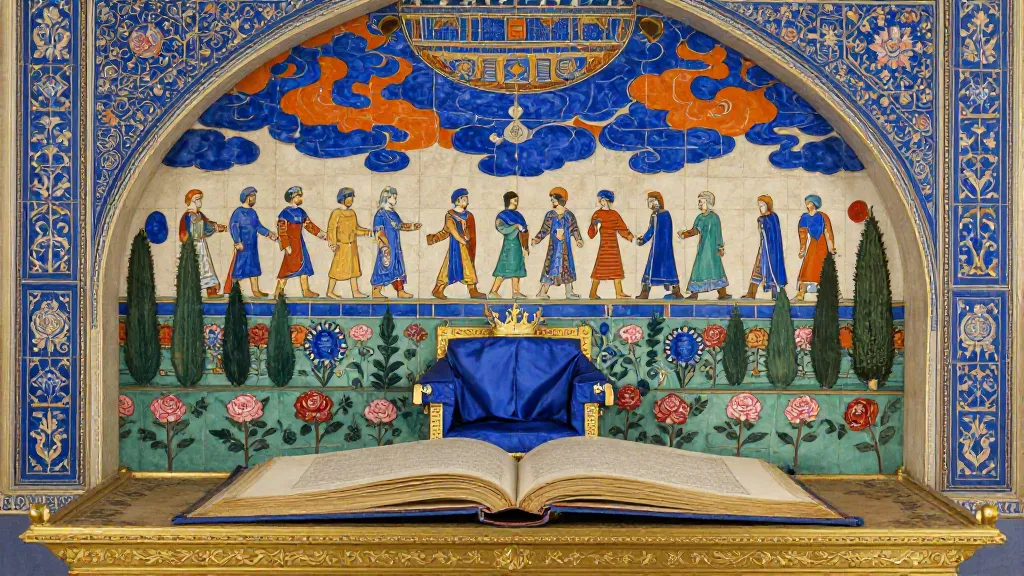
فردوسی Ferdowsi (c. 977–1010 AD)
شاهنامه
The Book of Kings — Fall of the Sasanians
The final chapters of Iran's national epic. Ferdowsi recounts the collapse of the Sasanian dynasty — from the grandeur of Khosrow Parviz, through a cascade of succession crises, to the Arab conquest that ended over a thousand years of Iranian imperial civilization. Written in Persian verse around 1000 AD to preserve Iran's pre-Islamic heritage.
By Augustin Chan with AI · Published January 2025 · Updated March 2026
Historical Context
The Sasanian Empire (224–651 AD) was the last pre-Islamic Persian dynasty and Rome's greatest rival. At its height under Khosrow Parviz, it stretched from Egypt to Central Asia. Its fall — through internal betrayal rather than external conquest — is one of history's most dramatic collapses. The empire that had humbled Roman emperors was destroyed in barely twenty years.
Ferdowsi wrote these passages four centuries after the events, working from earlier prose chronicles now lost. His account is both history and elegy — a poet's lament for a civilization he believed was betrayed from within.
Chapters بخشها
The Machinery of Grandeur
Institutional success breeds institutional blindness — Khosrow Parviz's empire runs on momentum long after the judgment that built it has gone.
6 chapters · c. 590-615 AD
When the Center Cannot Hold
Imperial disintegration follows a mechanical sequence: fiscal collapse, military desertion, provincial autonomy, then the center discovers it is governing nothing.
7 chapters · c. 615-628 AD